

Within contemporary manufacturing systems, metal forming technologies continuously drive the development and innovation of industrial products. Press Stamping, as an efficient and precise cold metal forming process, has become an indispensable core manufacturing method for numerous industries such as automotive, aerospace, electronics, and home appliances. This article delves deeply into the principles, developmental history, latest trends, and pivotal role of Press Stamping technology in modern industry.

I. Basic Principles and Process Scope of Press Stamping Technology
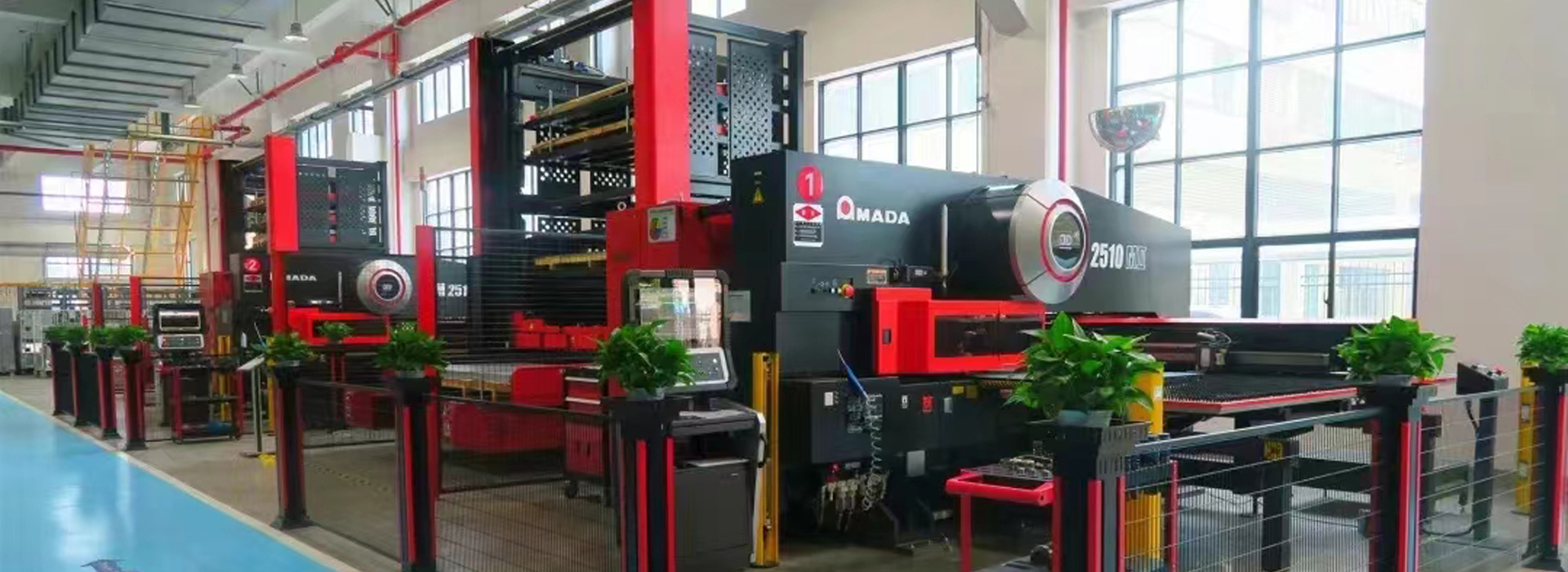
Press Stamping is a manufacturing process that utilizes the plasticity of sheet metal. By applying force through a dedicated die mounted on a press, the sheet metal is made to separate or plastically deform to obtain parts of the desired shape and dimensions. This process primarily encompasses basic operations like blanking, bending, drawing, and forming. A complete Press Stamping production line typically includes uncoiling, leveling, feeding, stamping, and finished part collection stages, with its core lying in the precision design of the dies and the stable output of the press. Modern Press Stamping heavily relies on Computer-Aided Design and Manufacturing (CAD/CAM) technology, enabling the efficient transition from 2D drawings to complex 3D parts. It features fast production cycles, high material utilization, and excellent part consistency, making it particularly suitable for high-volume production.
II. The Evolution of Press Stamping Technology and Its Integration with Automation
Press Stamping technology is not static; it has evolved from mechanical presses to hydraulic presses, and now to today's high-speed, precision servo presses. Early stamping operations were labor-intensive, had low safety, and limited precision. With the introduction of CNC technology and automation systems, especially the integration of robots and feeding systems, modern Press Stamping lines have achieved a high degree of automation. For instance, in automotive body panel production, continuous automated lines composed of multiple large presses can produce dozens of large body parts per minute, demonstrating the formidable capability of Press Stamping in large-scale manufacturing. This automation shift has not only significantly boosted production efficiency and safety but also reduced material waste through precise control systems and ensured extremely high part dimensional stability. The application of sensor technology and online monitoring systems has made real-time monitoring of die status, stamping force, and part quality possible, propelling Press Stamping toward intelligent development and predictive maintenance.
III. Analysis of Industry Applications and Key Roles
The application of Press Stamping is extremely broad, with its products penetrating almost every aspect of modern life.
Automotive Industry: This is the largest application field for Press Stamping. From large body panels like doors, hoods, and trunk lids to structural frame components, seat frames, and airbag parts, an ordinary passenger car contains thousands of stamped parts. The trend toward lightweighting is driving the development of stamping technologies for high-strength steels and aluminum alloys, placing higher demands on die materials and process control in Press Stamping.
Electronics Industry: Casings, internal structural parts, heat sinks, connectors, and more for smartphones, computers, and home appliances extensively use precision stamped parts. These parts are often small, complex in shape, and require tight tolerances, necessitating high-precision progressive dies and multi-station Press Stamping technology to ensure production efficiency and accuracy.
Aerospace and Energy: Aircraft skins, engine components, as well as solar panel mounts, battery pack enclosures (Battery Enclosure), also widely apply stamping forming techniques for special alloys. These sectors impose extremely high requirements on part strength, reliability, and lightweighting, fostering the development of advanced Press Stamping derivative technologies such as hot stamping and hydroforming.
IV. Materials, Dies, and Sustainability Challenges
The performance boundaries of Press Stamping are largely constrained by materials science and die technology. Today, to meet environmental and performance needs, the industry is increasingly using high-strength steels, aluminum alloys, magnesium alloys, and even composite materials. These new materials often have poor formability and significant springback effects, posing challenges to traditional Press Stamping processes and giving rise to new simulation software and process compensation techniques. As the core of Press Stamping, the cost of die design, manufacturing, and maintenance constitutes a significant portion of the total project cost. Modern die manufacturing is inseparable from CNC Machining Parts technology to ensure cavity precision and surface quality. Simultaneously, the lifespan and coating technology of die steels directly impact production line downtime and overall costs.
Regarding sustainability, Press Stamping faces a dual mission: first, to improve material utilization by optimizing nesting design and process planning to reduce scrap; second, to handle oil contamination and waste generated during production. Furthermore, energy consumption in stamping workshops, particularly the electricity consumption of large presses, is a major industry focus. Promoting equipment energy efficiency upgrades and process optimization is a crucial pathway toward green manufacturing.
V. Future Outlook: Intelligence and Flexibility
Looking ahead, Press Stamping technology will continue to develop towards greater intelligence and flexibility. Digital twin technology will completely replicate the stamping process in a virtual space, enabling predictive optimization of process parameters. Artificial intelligence and machine learning algorithms will be used for real-time identification and root cause analysis of quality defects, further improving product yield. Concurrently, to adapt to the market demand for high-mix, low-volume production, quick die change technology and flexible stamping cells suitable for medium-to-low volume production will see wider application.
In conclusion, as a foundational process in the field of metal forming, Press Stamping will remain a pillar technology for the manufacturing industry, especially in discrete manufacturing, for the foreseeable future. Its continuous integration with new materials and technologies will constantly expand its capabilities, providing more precise, complex, and cost-effective metal component solutions for various industries, thereby continuing to solidify the material foundation of modern industry.