

In the ongoing evolution of modern manufacturing towards lightweighting, high performance, and complex design, Computer Numerical Control machining technology plays a pivotal role. Among the myriad of machinable materials, aluminum alloys stand out as the ideal choice for achieving these design goals due to their excellent overall properties. Consequently, Aluminum CNC Parts—aluminum alloy components manufactured via CNC machining technology—have become a cornerstone in multiple high-end industries, including aerospace, automotive, electronics & telecommunications, and medical devices. This article delves into the material advantages, processing techniques, quality control, and the role of Aluminum CNC Parts in driving product innovation across sectors.

I. Material Advantages: Why Choose Aluminum Alloy for CNC Machining?
The widespread suitability of aluminum alloy as a primary material for CNC Machining Parts stems from a unique set of physical and chemical properties that directly translate into competitive advantages for end products:
Exceptional Strength-to-Weight Ratio: This is aluminum's most fundamental advantage. Compared to steel, many aluminum alloys provide sufficient structural strength while reducing weight by approximately one-third. This is critical for sectors pursuing weight reduction to improve fuel efficiency, extend range, or enhance dynamic performance (e.g., aerospace, new energy vehicles, consumer electronics). Aluminum CNC Parts are often the preferred choice for manufacturing lightweight Battery Enclosures or internal device structures.
Superior Machinability: Most aluminum alloys are relatively soft with low cutting resistance, allowing for higher spindle speeds and feed rates. This enhances CNC Machining efficiency, reduces cycle times, and lowers tool wear costs, making the production of complex Aluminum CNC Parts more feasible in terms of time and economics.
Excellent Thermal and Electrical Conductivity: Aluminum is an excellent conductor of heat, making it ideal for applications requiring efficient heat dissipation, such as LED heat sinks, power electronics housings, and computer CPU coolers. Its good electrical conductivity also suits components needing electromagnetic shielding or current transmission.
Good Corrosion Resistance & Surface Treatment Potential: A natural, dense oxide layer forms on aluminum surfaces, providing inherent corrosion resistance. Surface treatments like anodizing, electroless nickel plating, and painting can significantly enhance corrosion and wear resistance while offering diverse aesthetic finishes to meet varying needs from industrial equipment to consumer products.
Non-Magnetic and Fully Recyclable: The non-magnetic nature of aluminum makes it suitable for magnetically sensitive environments (e.g., near medical MRI equipment). Furthermore, aluminum is highly recyclable, aligning with sustainable manufacturing trends.
II. CNC Machining Process: Transforming Design into High-Precision Aluminum Parts
Manufacturing high-quality Aluminum CNC Parts involves far more than simply placing an aluminum block into a machine. It entails a systematic engineering process:
Design & Programming: The process begins with a 3D CAD model of the product. Using CAM software, engineers plan the optimal tool paths, cutting parameters (speed, feed, depth of cut), and fixturing strategy based on the part's geometry, tolerance requirements, and material properties. Efficient programming is crucial for ensuring precision, surface finish, and production efficiency.
Material Selection & Pre-processing: Selecting the appropriate aluminum alloy grade based on part performance requirements is key. Common choices include 6061 (good all-around properties, most versatile), 7075 (high strength, often used in aerospace), and 5052 (good formability, corrosion resistant). Blanks may undergo pre-heat treatment to achieve the optimal state for machining.
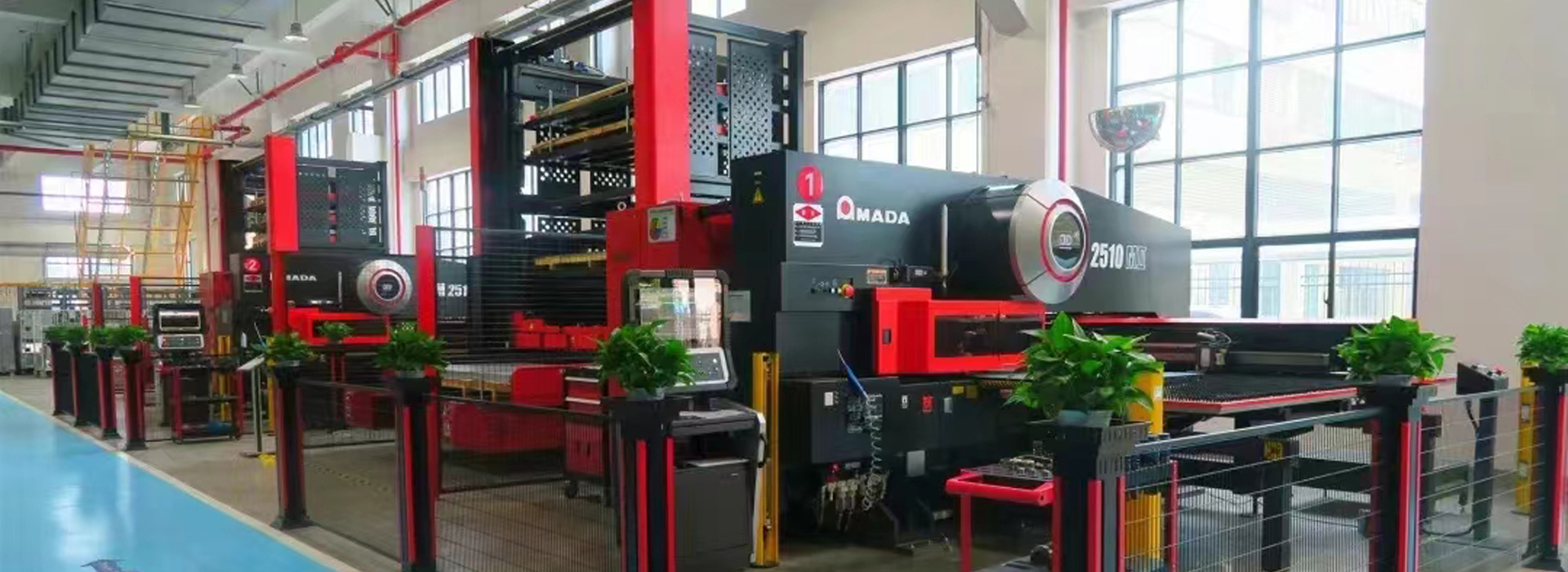
Precision Machining & Multi-Process Integration: Modern multi-axis CNC machining centers can perform milling, drilling, tapping, boring, and other operations in a single setup, producing Aluminum CNC Parts with complex contours, precise hole patterns, and tight tolerances (down to ±0.01mm or better). For certain features, auxiliary forming using Metal Stamping Service might be combined.
Post-Processing & Quality Verification: Parts typically require deburring and cleaning after machining. Subsequently, specified surface treatments, such as anodizing for increased hardness and corrosion resistance, are applied. Finally, comprehensive dimensional inspection using precision metrology equipment (like CMMs, profilometers) is mandatory to ensure every Aluminum CNC Part fully conforms to the design specifications.
III. Rigorous Quality Control & Industry Standards
Given their frequent use in critical applications, the quality control system for Aluminum CNC Parts must be extremely stringent. This includes:
Full-Process Control: A complete traceability chain is established, from incoming raw material inspection (chemical composition, mechanical properties), to first-article and in-process inspections during machining, through to final outgoing inspection.
Application of Advanced Inspection Technologies: Beyond traditional gauges, non-contact scanning and optical measurement are increasingly used to obtain comprehensive 3D dimensional data for comparison with the original CAD model.
Compliance with Specific Industry Norms: For example, aerospace parts must follow the AS9100 system, medical parts must meet ISO 13485 standards and biocompatibility requirements, and automotive parts may need to comply with IATF 16949. These norms impose the highest requirements on process control, documentation, and traceability for Aluminum CNC Parts.
IV. Broad Application Fields & Driver of Innovation
Aluminum CNC Parts are found in nearly all high-end manufacturing sectors:
Aerospace & Defense: Aircraft fuselage structures, engine mounts, UAV frames, satellite components. The extreme pursuit of weight reduction and reliability makes precision machining of high-strength aluminum alloys indispensable.
Automotive & Transportation: Battery trays and motor housings for new energy vehicles, lightweight suspension components, drivetrain parts. The electrification trend is significantly increasing demand for complex Aluminum CNC Parts.
Electronics & Telecommunications: 5G base station antenna housings, server chassis, high-end router enclosures, test equipment fixtures. Excellent thermal management and EMI shielding properties are key.
Medical Devices & Equipment: Surgical robot joints, slip ring assemblies for imaging equipment (CT, MRI), diagnostic instrument housings. Requirements include non-magnetism, high cleanliness, and biocompatible surfaces.
Industrial Automation & Robotics: Robot arm links, end-effectors, precision optical mounts, sensor housings. These applications demand high rigidity, low inertia, and excellent dimensional stability.
Consumer Electronics: Smartphone mid-frames, laptop casings, camera bodies. These combine precision structures, aesthetic surfaces, and lightweight needs.
V. Future Trends: Towards Smarter, More Integrated Manufacturing
Looking ahead, the manufacturing technology for Aluminum CNC Parts is evolving in the following directions:
Hybrid Additive & Subtractive Manufacturing: Using metal 3D printing to create near-net-shape complex aluminum preforms, followed by high-precision CNC finishing, achieving geometries unattainable by traditional methods alone.
Automation & Smart Production Lines: The "lights-out factory" model, integrating robots for automatic loading/unloading, in-process measurement, and adaptive machining compensation, will further enhance the consistency, efficiency, and scale of Aluminum CNC Parts production.
Development of New Materials & Processes: Ongoing research into machining processes for aluminum matrix composites and novel alloys targeting higher strength, better thermal conductivity, or other special properties.
Digital Twin & Full-Process Simulation: Simulating the entire process from material behavior to cutting forces and thermal distortion in a virtual environment to optimize processes, reduce trial and error, and achieve right-first-time parts.
Conclusion
In summary, Aluminum CNC Parts represent the efficient fusion of precision machining technology and advanced materials science. They are not only the physical enablers of product lightweighting, performance enhancement, and design innovation but also a significant indicator of a nation's advanced manufacturing capabilities. From conceptual design to finished product, every high-quality Aluminum CNC Part embodies a deep understanding of material science, the pursuit of machining excellence, and an unwavering commitment to quality control. As end-use industries continue to raise performance demands, the design and manufacturing technology of Aluminum CNC Parts will undoubtedly continue to evolve, providing a solid and reliable material foundation for the next generation of technological innovation.