

What to Look for in a Copper Busbar Manufacturer (And What We Actually Do)
If you've ever sourced copper busbars from overseas, you know the gap between a drawing and a finished part can be wider than expected. Hole positions off by half a millimeter. Plating that looks fine but flakes under thermal cycling. Quotes that sound great until you realize the supplier missed half your tolerances.
We've been on the receiving end of those drawings since 2017. Here's what we've learned about making custom copper busbars that actually work when they arrive.
The Basics: What a Copper Busbar Actually Is
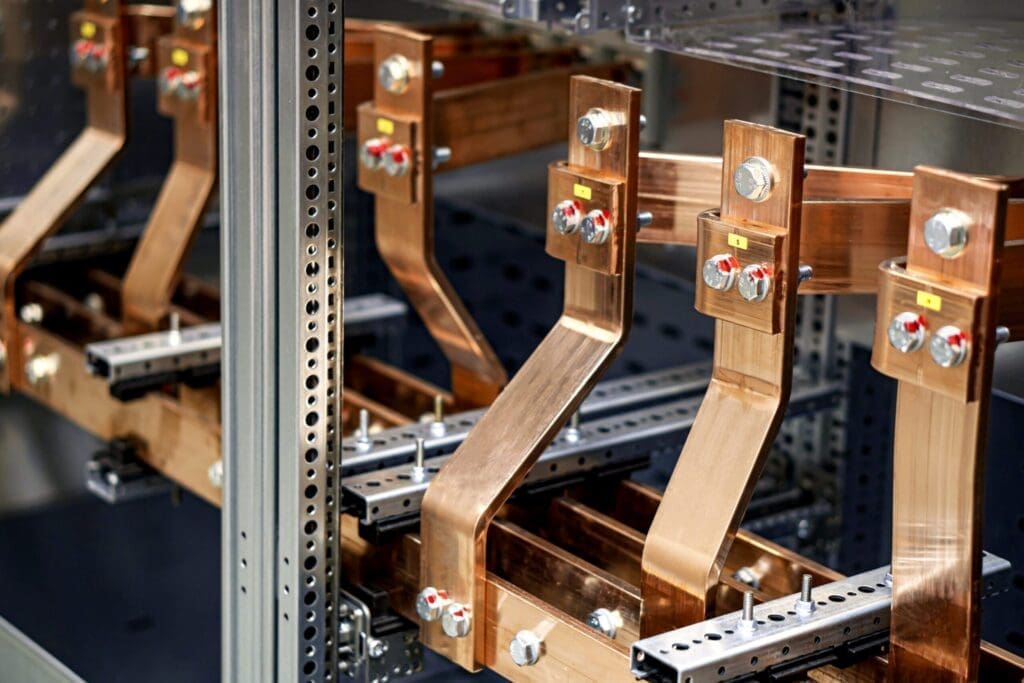
A copper busbar is a solid strip or bar of copper used to conduct electricity within switchgear, battery systems, power distribution units, and industrial control panels. Compared to cable, it carries more current in less space, runs cooler, and lasts longer in high-vibration environments.
Most of the copper busbars we produce use T2 electrolytic copper (C11000, 99.9% pure, 100% IACS conductivity). Some projects specify aluminum for weight savings, but when the application demands low resistance and high thermal capacity, copper is still the default.
The parts we see fall into a few categories:
l Flat solid busbars — straight strips with drilled or punched holes
l Laminated busbars — multiple thin layers bonded together, used where flexibility or high-frequency performance matters
l Formed busbars — bent into 3D shapes to fit specific enclosures
l Plated busbars — tin or nickel surface treatment for oxidation resistance
Thickness typically ranges from 2mm to 6mm for standard power distribution. We've handled up to 10mm for high-current industrial applications, though that's less common.

Our Actual Equipment for Copper Busbar Work
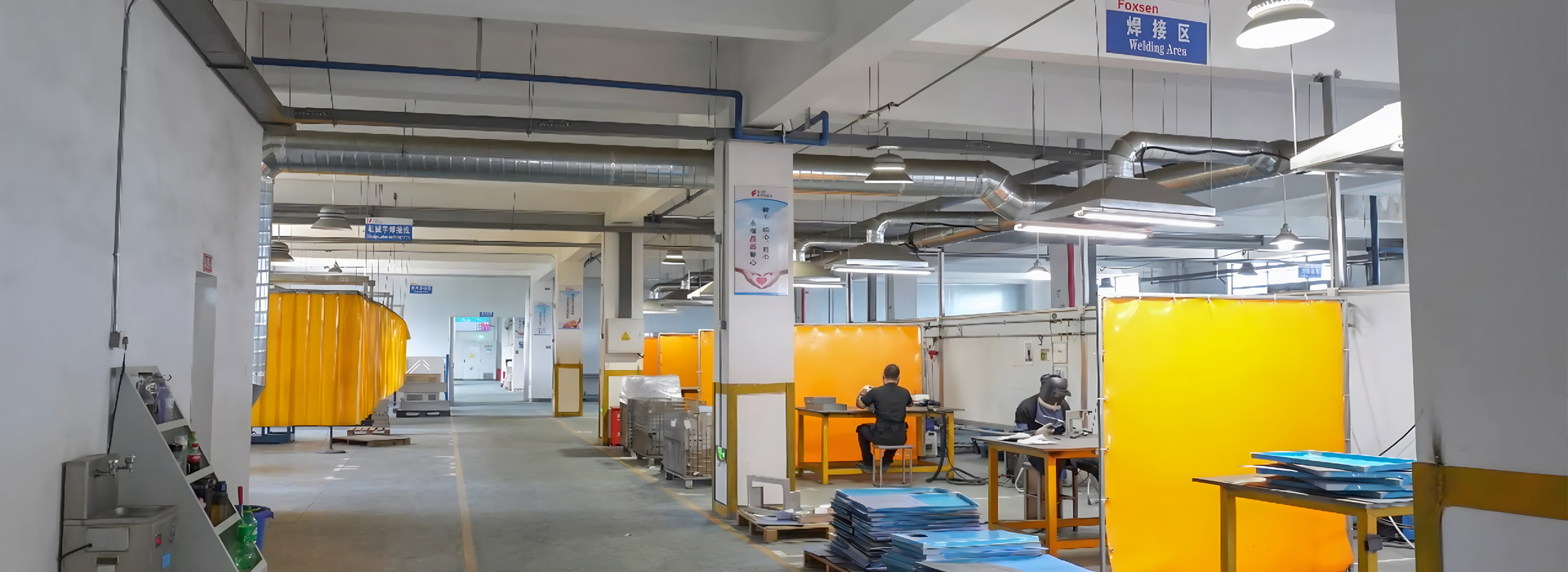
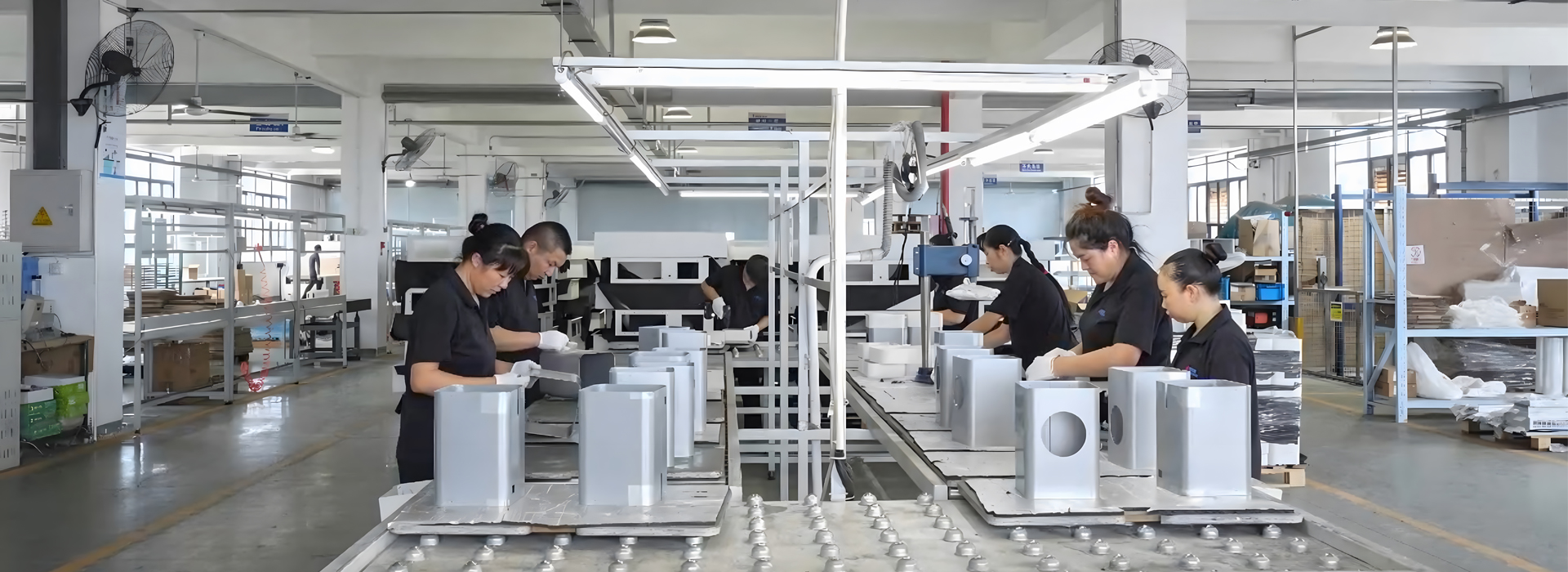
We don't have a dedicated "busbar factory." We have a sheet metal shop that happens to be good at precision copper work. Here's what gets used:
Cutting
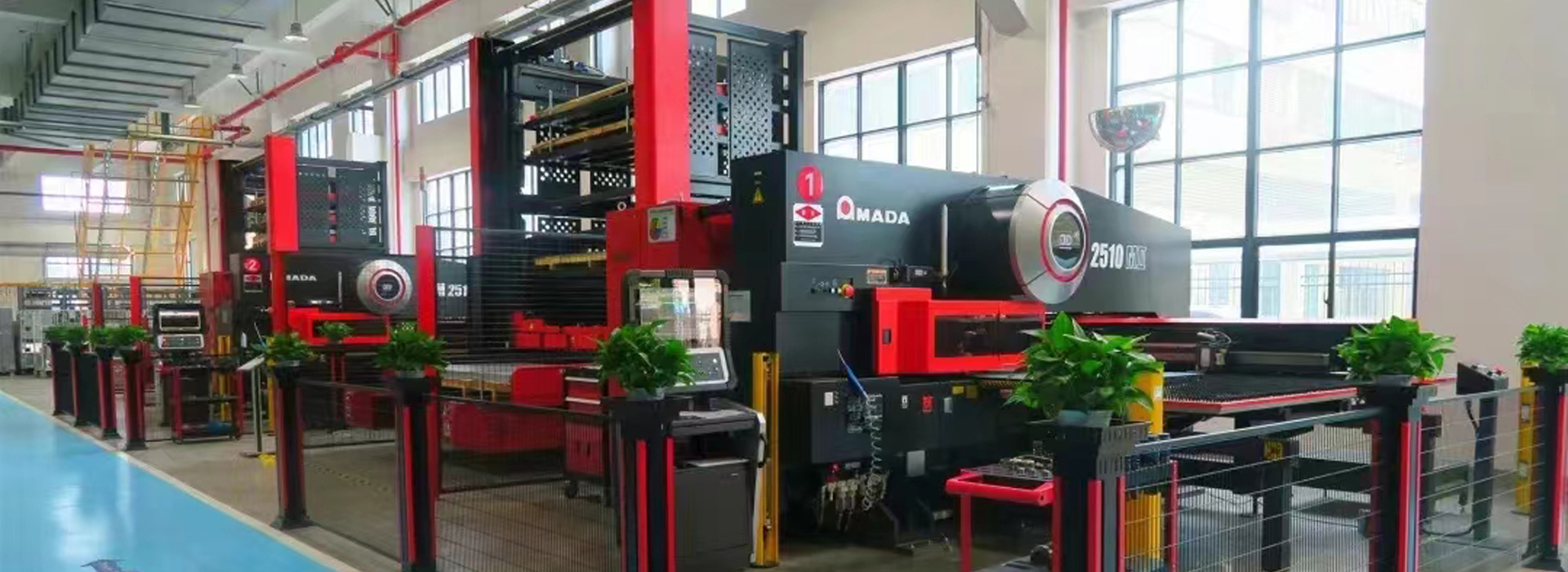
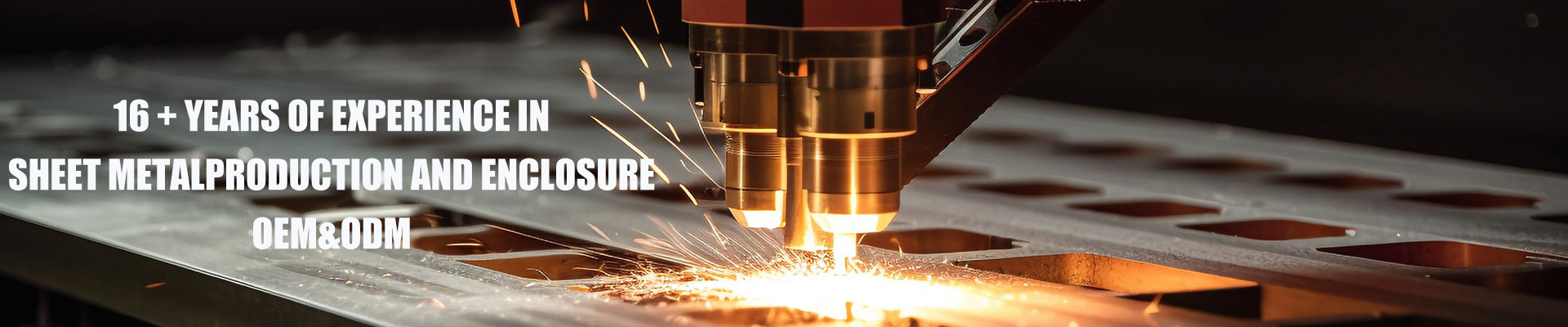
l AMADA 3015LVP-40CF laser (6000W) — for prototypes, complex outlines, or tight-tolerance features
l 2× AMADA AE2510 CNC turret punches — for high-volume hole patterns, ventilation slots, standard mounting holes
l Hydraulic shear — for straight-line cutting of simple rectangular bars
Copper reflects more laser energy than steel or aluminum. That means slower cut speeds, different nozzle standoff, and more frequent lens checks. Our operators know this because they've been told — repeatedly — after a few early miscuts on 4mm material.
Machining
l CNC drilling and milling — for holes that don't align with standard punch tooling, or for features that need tighter positional tolerance than punching allows
l Tapping— threaded holes for bolted connections, typically M6 to M12
Hole position tolerance we hold: ±0.05mm on critical dimensions, verified with first-piece inspection on every setup.
Bending
l 8× Accurpress CNC press brakes (40 to 300 ton)
l 1× 300-ton robotic bending cell — for repeat orders where consistency matters more than flexibility
Copper work-hardens quickly. Bend it too tight, or bend the same area twice, and it cracks. Our bend radius guidelines are conservative for a reason.
Surface Treatment
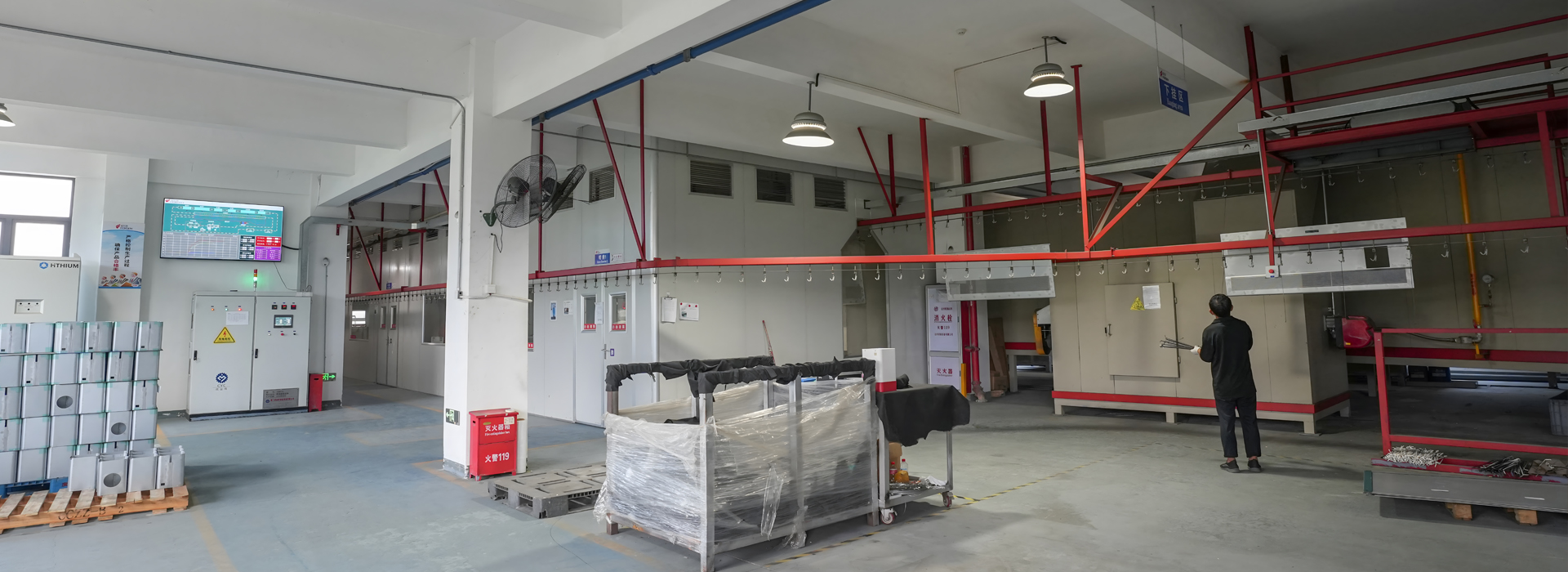
We don't do plating in-house. We work with certified local partners for:
l Tin plating — 3 to 8μm, matte or bright finish, improves solderability and oxidation resistance
l Nickel plating — 5 to 12μm, better high-temperature stability than tin alone
l Insulation coating — epoxy powder or heat-shrink sleeve, specified by voltage rating and operating temperature
Every plated batch gets adhesion testing. We keep plating thickness records and can provide certificates on request. Salt spray testing (500 hours standard, 1000 hours available) is done in our own chamber.
Where Our Copper Busbars Actually Go
Based on the projects we've handled over the past few years, here's the breakdown:
Energy Storage / BESS
This is our fastest-growing segment. Battery energy storage systems need busbars to connect cells to modules, modules to inverters, and inverters to grid interfaces. The parts are often large (80mm wide, 5mm thick), heavily drilled, and tin-plated for corrosion resistance in outdoor cabinets.
Typical requirements: high current capacity, low contact resistance, thermal cycling durability. We verify conductivity on material incoming and check plating adhesion before shipment.
Data Center Power Distribution
PDU manufacturers and data center integrators use copper busbars for power distribution units, UPS bypass cabinets, and busway systems. These tend to be nickel-plated rather than tin-plated — not for corrosion, but for stable contact resistance over 10-15 years of continuous operation.
Tolerances are tighter here. ±0.1mm on hole position is common. We use CMM inspection for these orders.
Switchgear and Electrical Cabinets
Standard industrial work. Low-voltage switchgear, motor control centers, power distribution boards. Usually 2-4mm T2 copper, tin-plated, with standard hole patterns on regular centers.
Volume varies widely — from 50-piece prototype runs to several thousand units for established product lines.
Industrial Automation
Machine builders and automation integrators need custom copper busbars for control panels, servo drives, and power supplies. These are often the most complex parts: multiple bends, mixed hole sizes, insulation on select sections.
We prototype these in 5-10 days. Production volumes are typically 100-500 pieces.
What Our Engineering Review Actually Catches
We offer free DFM review. Not because we're generous, but because catching a problem at the drawing stage costs less than remaking parts.
Common issues we flag:
l Hole too close to bend line — material tears or distorts during forming
l Insufficient bend radius — copper cracks, especially on thicker material
l Plating coverage gaps — internal corners or deep recesses that plating bath can't reach uniformly
l Tolerance stack-up — a hole position that's fine in isolation but misaligns when assembled with mating parts
Last year we reviewed a drawing where two mounting holes were 2mm from a proposed bend line. The client moved them to 5mm. No drama, no scrap, just a quick email exchange.

Quality Control: What We Actually Check
Incoming Material
l Mill certificate verification against order specification
l Thickness check with micrometer (±0.01mm resolution)
l Conductivity spot test with eddy current meter
In-Process
l First-piece inspection on every setup, signed off by operator
l QC spot checks every 2 hours on running production
l Bend angle verification with digital protractor
Final Inspection
l CMM (coordinate measuring machine) for critical hole positions and overall dimensions
l Plating thickness check — XRF for tin/nickel, magnetic gauge for non-magnetic substrates
l Adhesion test — cross-hatch or bend test per batch
l Visual inspection for surface defects, edge burrs, plating uniformity
Documentation
l Dimensional inspection report per batch
l Material certificate (mill test report)
l Plating certificate (from partner, reviewed by us)
l Custom inspection protocol on request
We added a MES system in 2024. Before that, tracking a part meant finding the paper traveler. Now it's barcode-scanned at each station. Not exciting, but it works.
What We Won't Pretend
We're not the cheapest option.
If your only criteria is price per kilogram, there are smaller shops in China that will undercut us. We've seen their work. Sometimes it's fine. Sometimes the plating flakes off in six months.
We're not the biggest either.
10,000 square meters, 120 people, 16 years in business. Big enough for consistent quality control. Not big enough to absorb a 50,000-piece rush order without scheduling impact.
We don't design power systems.
We fabricate to your drawings. We can suggest improvements for manufacturability. We won't tell you what current rating your busbar needs — that's your electrical engineer's job.
When We Make Sense
Consider us if:
l You need custom copper busbars that fit your assembly without hand-filing
l You want a supplier who flags drawing issues before cutting metal
l Material certificates and inspection reports matter for your quality system
l You've had issues with plating adhesion or dimensional consistency from previous suppliers
Probably not the best fit if:
l Price is the only decision factor and you're willing to accept higher variation
l You need 100,000 pieces next month
l You want us to design the electrical system from scratch
Request a Quote
Email: Anne@xmfoxsen.com
WhatsApp/WeChat: +86 132 9592 1800
Send a drawing, a photo, or a description. We'll tell you if it's something we can do, what it will cost, and where the potential issues are. No charge for the review.
Foxsen Industrial Technology Co., Ltd.
No.108, Rongyuan Road, Tongan District, Xiamen, Fujian, China