

Electronic Enclosure Design: What Engineers Actually Need to Know
A good electronic enclosure does two things: it protects what's inside, and it doesn't cause new problems. Sounds obvious, but the gap between those two goals is where most enclosure projects fail.
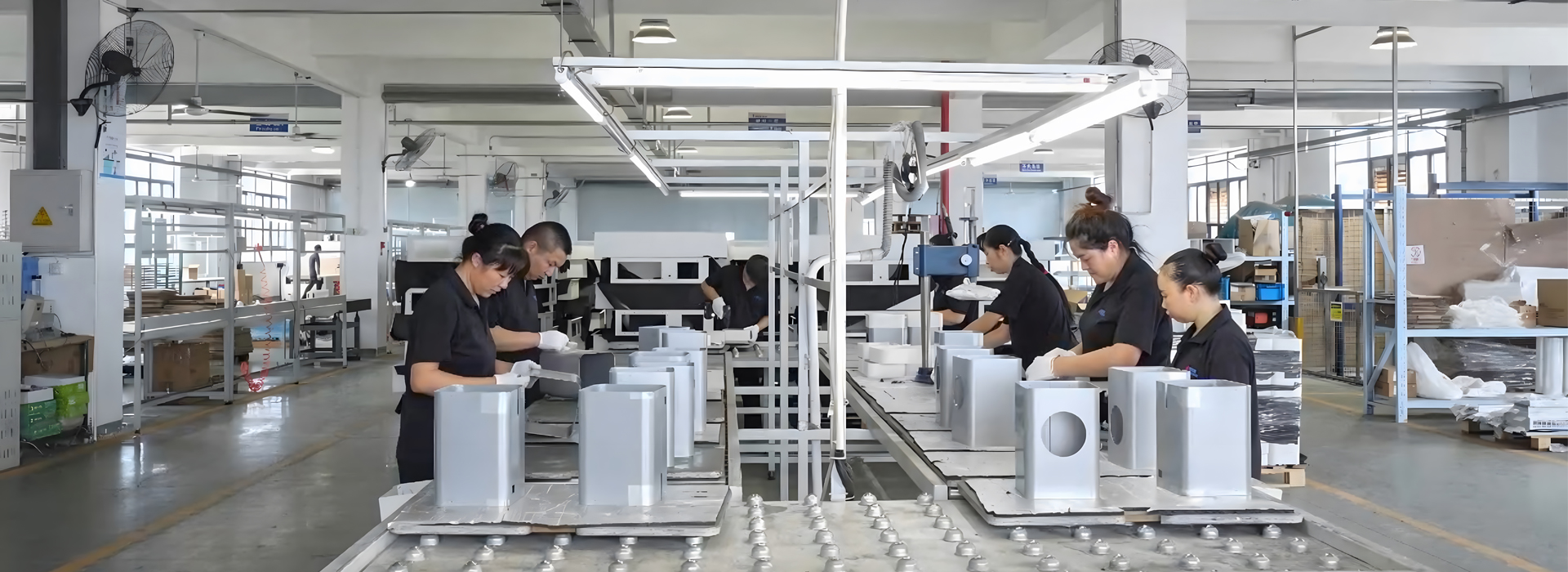
We've been fabricating custom electronic enclosures since 2017. Industrial control panels. Outdoor telecom boxes. Medical device housings. IoT sensor nodes. Each application demands different trade-offs between shielding, thermal management, cost, and manufacturability.
This article covers the practical decisions that determine whether your electronic enclosure works in the field or becomes a redesign six months later.
What an Electronic Enclosure Actually Does
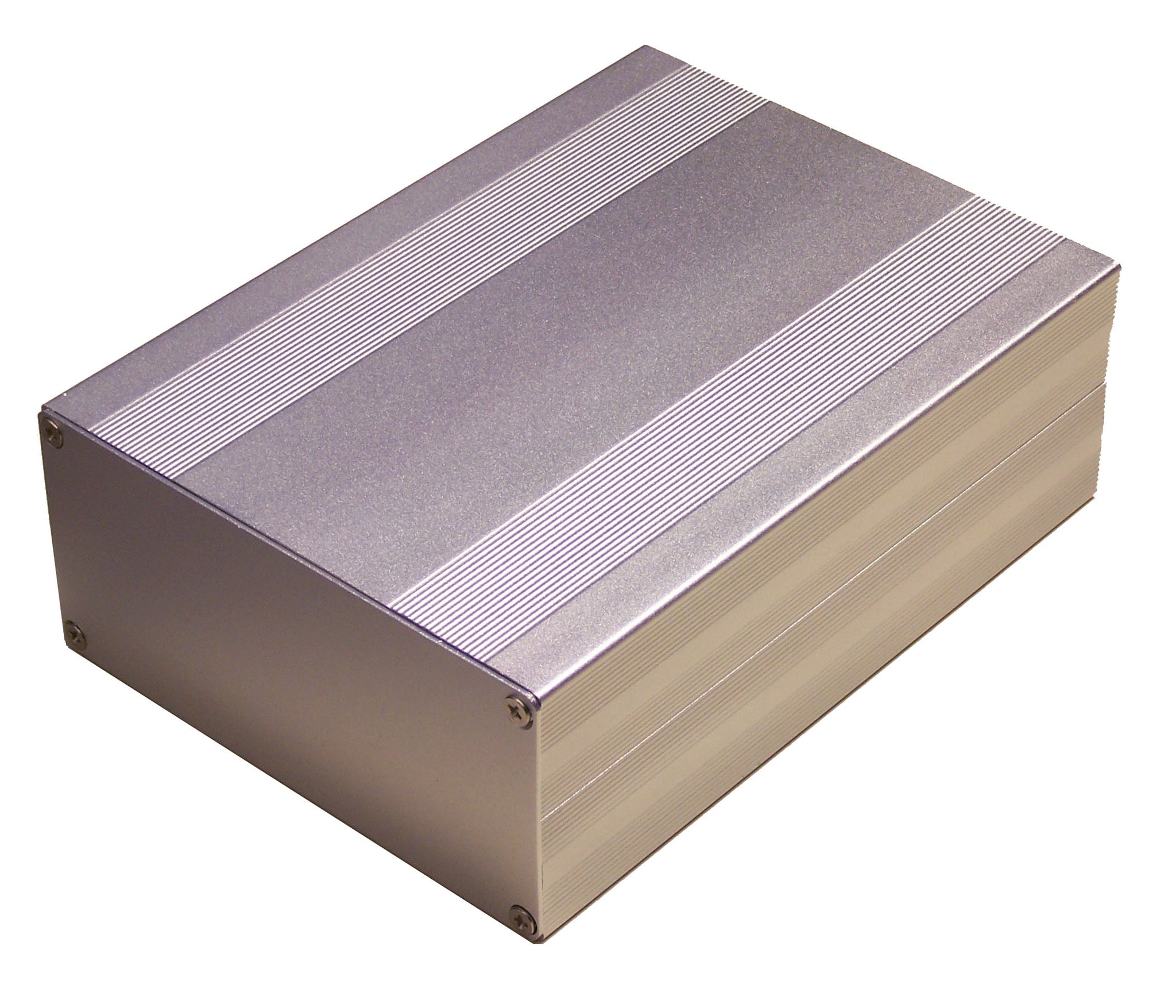
Protection is the baseline. An electronic enclosure keeps dust, moisture, and fingers away from live circuits. But modern applications add layers:
EMI/EMC Shielding
RF noise from switching power supplies or motor drives can leak through plastic housings. Metal electronic enclosures — steel or aluminum — provide inherent electromagnetic shielding. For sensitive measurement equipment or communication devices, we specify conductive gaskets and seam welding to maintain shielding continuity. We've fabricated enclosures for precision testing equipment where internal noise floor had to stay below -80 dBm. Seam continuity mattered more than wall thickness.
Thermal Management
Semiconductors keep getting hotter. An electronic enclosure that traps heat kills components faster than moisture. We design ventilation patterns, heat sink interfaces, and fan mounting structures based on actual thermal loads — not guesswork. For outdoor applications, we balance IP rating against airflow. IP67 with zero ventilation works for low-power sensors. It fails for motor drives or power converters.
Physical Security
Tamper-evident screws, lockable latches, and intrusion detection mounting points. Common in energy storage system monitoring equipment and data center infrastructure remote management nodes.
Environmental Sealing
IP ratings define protection against solids and liquids. But the test conditions (static water, short duration) don't match real-world scenarios. Driving rain on a telecom cabinet. Hose-down in a food processing plant. We design electronic enclosures with these actual conditions in mind, not just the certification badge.
Material Selection: When to Use What
The material choice for an electronic enclosure drives 60% of performance and 40% of cost. Here's how we guide clients:
Cold Rolled Steel (CRS)
Most common for indoor industrial electronic enclosures. Strong, formable, cost-effective. Powder coated for corrosion resistance. Standard thickness: 1.0mm to 2.0mm for panels, 1.5mm to 3.0mm for structural frames.
Limitation: without coating, rusts in humid environments. Not suitable for outdoor use without proper surface treatment.
Stainless Steel (304/316)
Used where corrosion resistance, hygiene, or appearance matters. 316 stainless steel enclosures for coastal or chemical environments. 304 stainless steel enclosures for food processing, medical equipment, or clean rooms.
We keep 1.5mm to 3.0mm thickness in stock. Higher material cost, but often lower lifecycle cost than coated steel in aggressive environments.
Aluminum Alloy (5052/6061)
Aluminum electronic enclosures dominate weight-sensitive and thermally demanding applications. 5052-H32 forms well. 6061-T6 machines precisely for heat sink interfaces. Natural oxide provides baseline corrosion resistance; anodizing improves it and adds color options.
Key advantage: thermal conductivity. An aluminum electronic enclosure acts as a heat spreader, reducing internal temperature rise by 10-20°C compared to steel in passively cooled designs.
Limitation: lower EMI shielding effectiveness than steel unless properly designed with conductive gaskets and seam treatment.
Galvanized Steel
Economical middle ground. Better corrosion resistance than CRS, cheaper than stainless. Common for outdoor telecom enclosures and utility boxes where appearance is secondary to function.
IP Ratings: What the Numbers Actually Mean
Engineers often specify IP65 because it sounds safe. Sometimes it's overkill. Sometimes it's not enough.
IP54 — Dust protected, water splashing. Suitable for clean factory floors with occasional washdown.
IP55 — Dust protected, water jets. Good for outdoor under eaves or covered industrial areas.
IP65 — Dust tight, water jets. Standard for outdoor electronic enclosures in moderate climates. But "water jets" in testing means 12.5 L/min from 3 meters for 3 minutes. Real monsoon rain exceeds this. For tropical or coastal exposure, we recommend additional drainage design.
IP66 — Dust tight, powerful water jets. Higher pressure, same duration. Better for exposed locations.
IP67 — Dust tight, temporary immersion. Useful for flood-prone installations or submersible equipment. But the test is 30 minutes at 1 meter. Continuous submersion requires IP68 with defined depth and duration.
NEMA Ratings — US standard with additional corrosion and construction requirements. NEMA 4X equals roughly IP66 with corrosion resistance. We fabricate to both standards depending on target market.
Manufacturing Processes That Matter
Laser Cutting
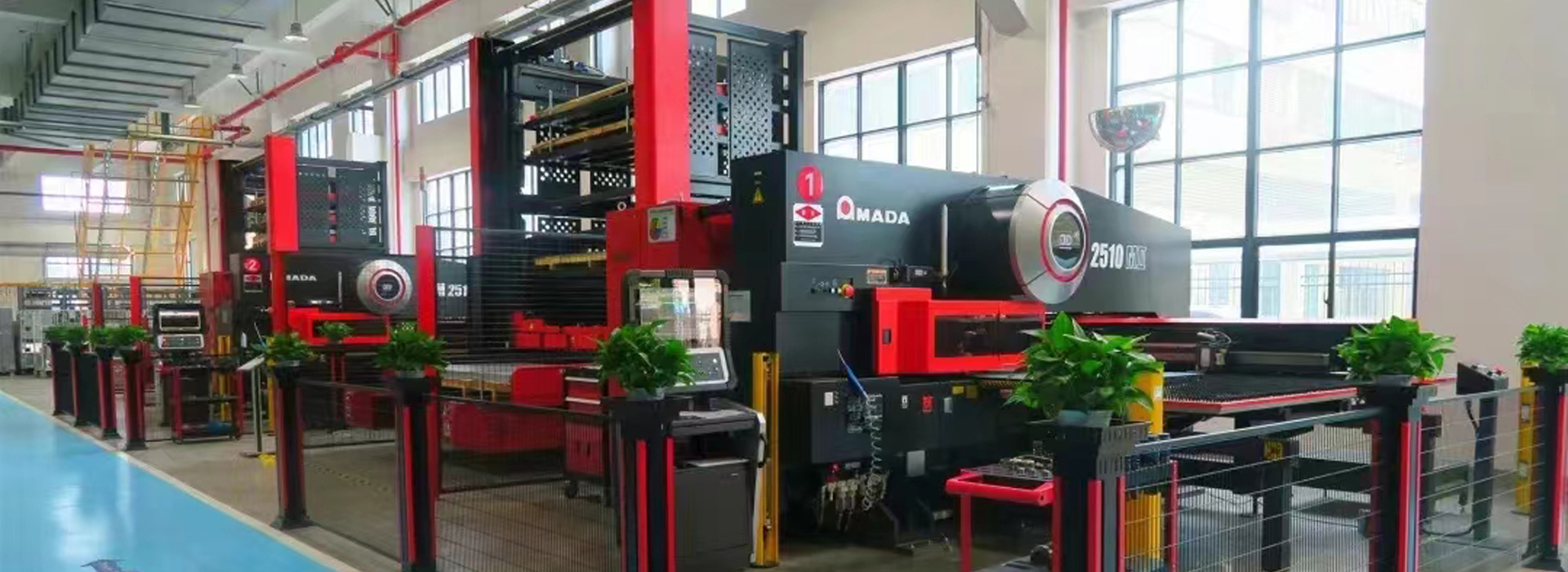
Our AMADA 3015LVP-40CF and Baichao 6000W handle panel profiles, ventilation slots, and mounting cutouts. Tolerance: ±0.1mm on critical features. For electronic enclosures with dense connector layouts, this precision prevents assembly interference.
CNC Punching
Two AMADA AE2510 turret punches for high-volume hole patterns. Faster than laser for standard configurations. Tooling cost amortized across thousands of units.
CNC Bending
Eight Accurpress brakes (40 to 300 ton) plus one 300-ton robotic bending cell. For electronic enclosures, bend accuracy determines panel gap consistency and seal effectiveness. We hold ±0.2mm on flange dimensions.
Welding
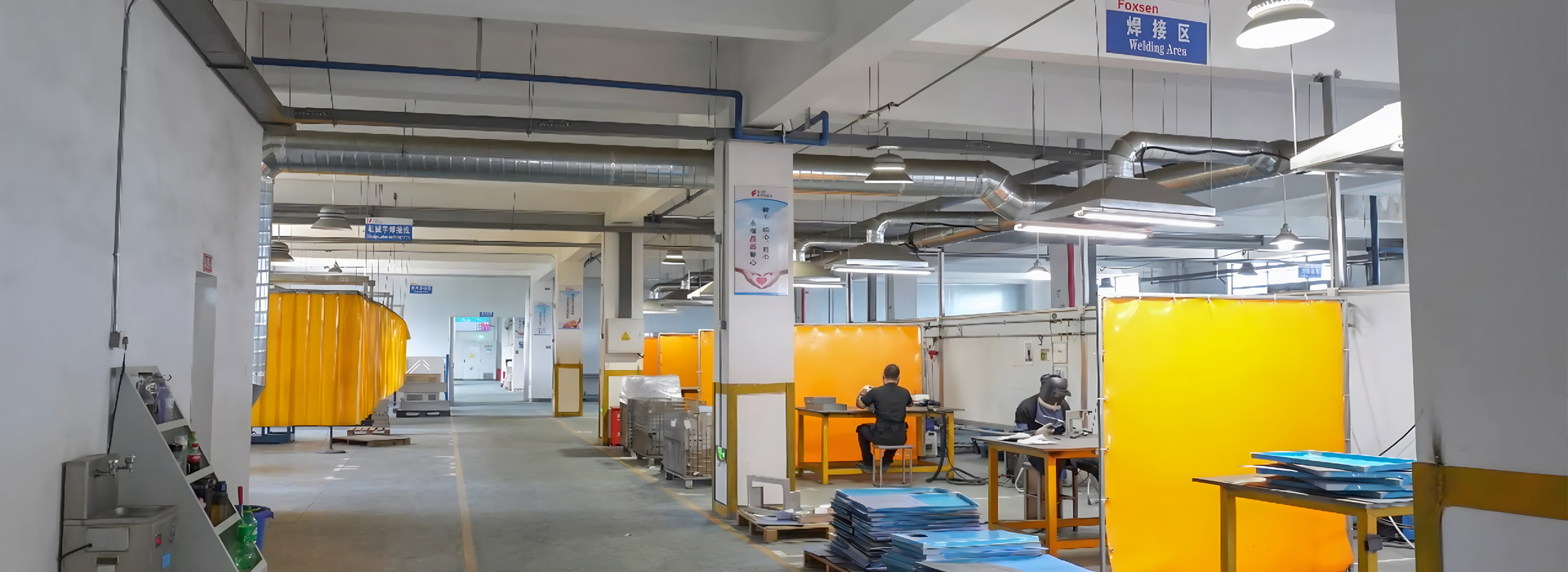
MIG, TIG, spot welding, plus Hyundai and Yaskawa robotic welders. For EMI-shielded metal electronic enclosures, continuous seam welding maintains conductivity across joints. For standard cabinets, spot welding with gasketed seams is cost-effective.
Surface Treatment
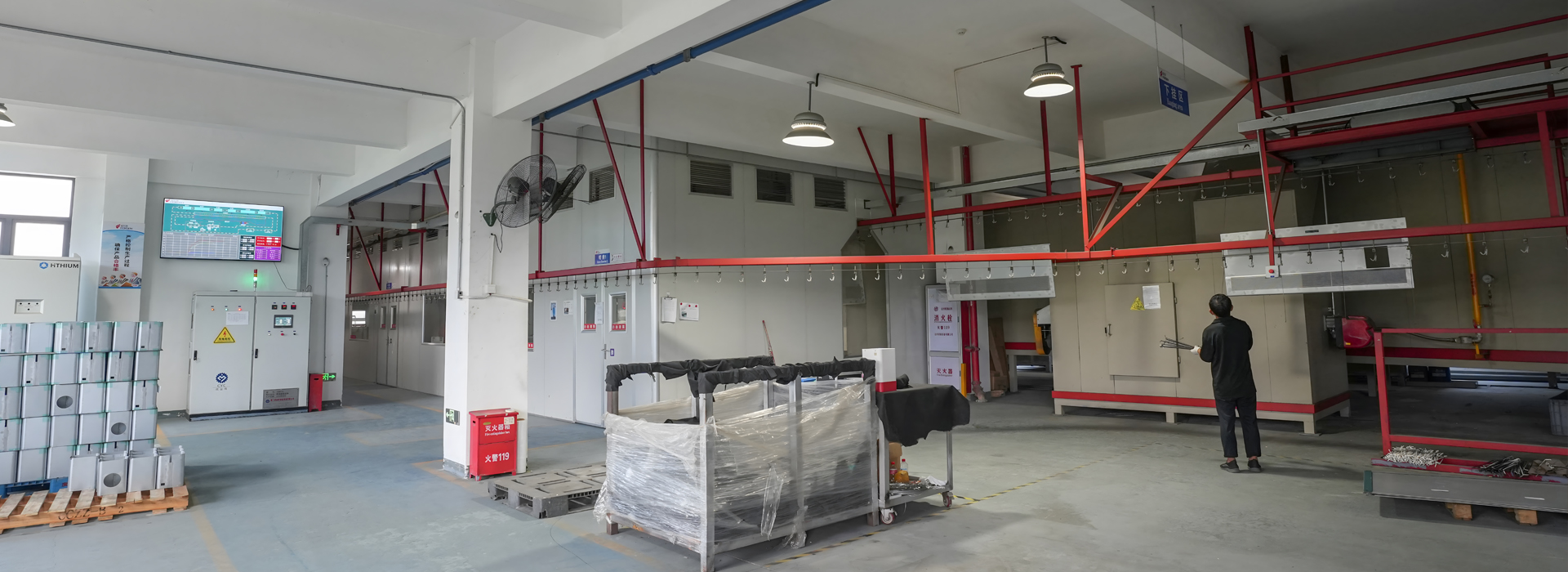
Fully automatic powder coating line. Standard colors: RAL 9005 (black), RAL 7035 (light gray). Custom colors on request. For aluminum electronic enclosures, anodizing (Type II decorative, Type III hardcoat) provides wear and corrosion resistance.
Thermal Design: The Most Common Oversight
We've received drawings for electronic enclosures with zero ventilation, 500W internal dissipation, and an IP65 requirement. Something has to give.
Passive Cooling Strategies
1. Thermal interface — Flat mounting surface to external heat sink
2. Fins and ribs — Cast or machined into aluminum electronic enclosure walls
3. Thermal vias — Internal heat spreaders conducting to external surface
4. Strategic vent placement — Bottom intake, top exhaust, leveraging natural convection
Active Cooling Integration
1. Fan modules — Standard 40mm to 120mm axial fans, thermostatic control
2. Blower systems — For high-static-pressure applications with dense internal components
3. Heat exchangers — Air-to-air or liquid-cooled for sealed high-power enclosures
Trade-offs
Every ventilation hole reduces IP rating. Every sealed surface traps heat. We model this with clients during DFM review — better to argue about thermal budget at the drawing stage than after prototypes fail.
FAQ: Working With FOXSEN on Electronic Enclosure Projects
Q: What materials do you recommend for outdoor electronics?
Aluminum electronic enclosures with anodizing or 316 stainless steel enclosures for coastal exposure. Galvanized steel works for moderate climates at lower cost. We discuss actual installation environment — not just "outdoor" — to specify correctly.
Q: Can you achieve IP67 with active cooling?
Yes, but it requires sealed heat exchangers or liquid cooling loops. The enclosure stays sealed; heat transfers through a wall-mounted exchanger. More complex, more expensive, but necessary for high-power outdoor applications.
Q: Do you provide EMI testing or certification?
We fabricate to shielding design principles — seam welding, conductive gaskets, proper grounding. We don't perform formal EMI testing in-house. We can recommend third-party labs and adjust fabrication based on test feedback.
Q: What's your typical lead time for prototypes?
Standard electronic enclosure prototypes: 5-10 days for sheet metal fabrication, plus 2-3 days for surface treatment. Complex assemblies with integrated heat sinks or custom machined features: 2-3 weeks.
Q: Can you handle mixed-material assemblies?
Common request. Aluminum electronic enclosure body with steel mounting brackets, or stainless steel faceplate on galvanized steel cabinet. We manage galvanic isolation with insulating hardware or compatible interface plating.
Q: How do I specify thermal requirements?
Tell us maximum internal ambient temperature, heat dissipation in watts, and any external heat sink or airflow available. We calculate ventilation area or recommend active cooling. If you have thermal simulation results, we design to meet them.
Q: What drawing formats do you accept?
STEP, IGES, DWG, DXF, PDF, SolidWorks. Sketches with dimensions work too — we've built enclosures from hand-drawn concepts with marked-up photos.