

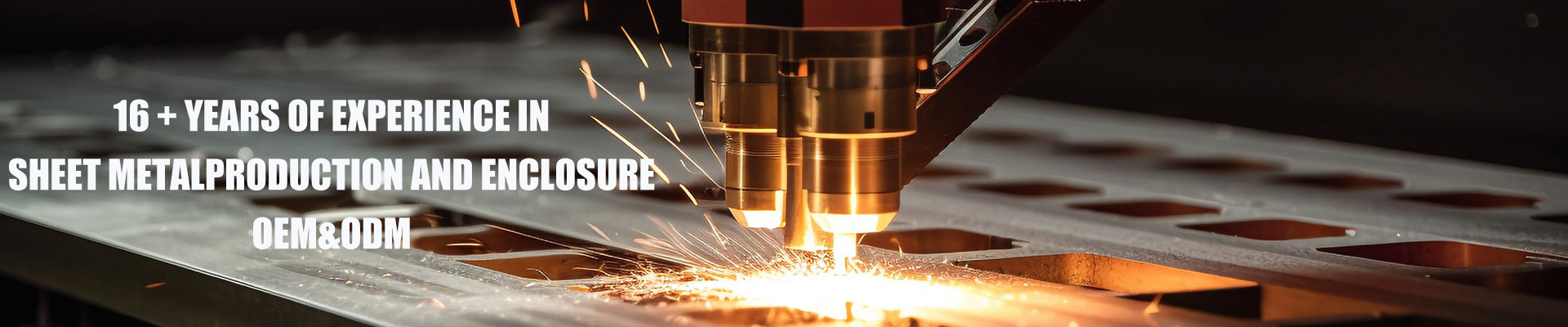
Metal Products Manufacturer for OEM & Custom Projects
Most factories will tell you they make "high-quality metal products." We've heard that line too many times.
FOXSEN started in 2017 with one laser cutter and a rented workshop in Xiamen. Today we run a 10,000-square-meter facility with 120 people, but the approach hasn't changed much — we still check every batch personally, and we still answer emails at 10 PM when a European client has an urgent question about their battery enclosure.
We make metal parts. More specifically: sheet metal fabrication, CNC machining, laser cutting, welding, and surface finishing — mostly for companies that need OEM manufacturing and don't want to fly to China every month to check quality.
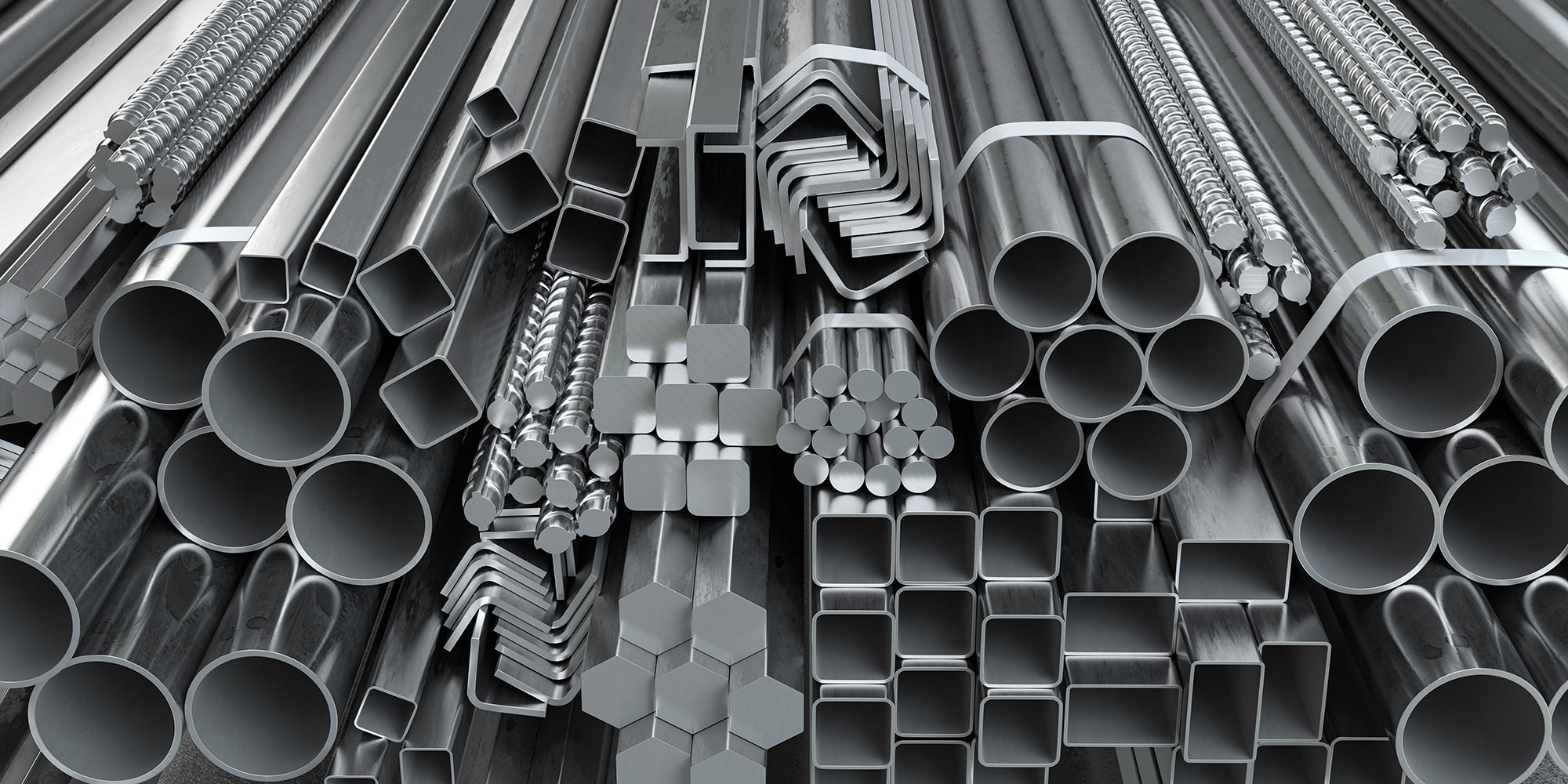
What We Actually Make
Our orders break down roughly like this:
Energy storage enclosures — About 30% of our output. Battery cabinets for BESS projects, mostly shipped to Germany and the Netherlands. These need to survive outdoor installation for 15+ years, so we spend extra time on sealing design and coating adhesion.
Data center racks & server cabinets — Growing fast. A client in Sweden came to us last year because their previous supplier couldn't hold ±0.5mm tolerance on 42U frames. We redesigned the bending sequence and got it to ±0.2mm. They're now ordering 200 units per quarter.
Electrical cabinets & switchgear parts — Standard industrial work, but volume is steady. Copper busbars, mounting plates, door panels.
Industrial automation frames — Machine bases, safety guards, control panel housings. Usually small batches, 50-200 pieces.
Telecom & medical enclosures — Stainless steel 316L for coastal telecom cabinets. Medical parts need passivation and specific surface roughness — we document every batch.
Food processing equipment — Mostly 304 stainless with sanitary welding. Not glamorous, but the margins are decent and clients rarely switch suppliers.
Materials We Work With
We don't process exotic alloys. The metals we handle daily:
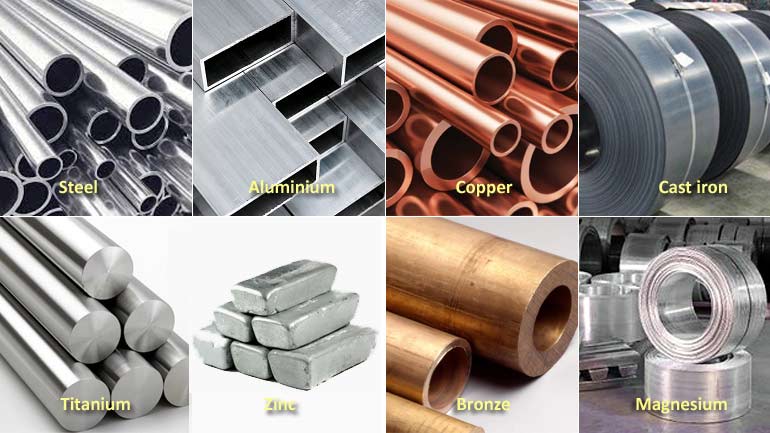
Stainless steel — 304 for general use, 316/316L for coastal or medical applications. We keep 2-3mm and 1.5mm thicknesses in stock to cut lead time.
Aluminum — 5052 and 6061. Good for lightweight enclosures, terrible for welding if you rush the prep. We don't rush.
Copper — Busbar work mostly. C11000 grade, cut on laser or punched depending on thickness.
Carbon steel / Cold rolled steel — The workhorse. SPCC, SPHC, various grades. We stock galvanized sheet too for outdoor cabinets.
Galvanized steel — Cheaper than stainless for corrosion resistance, but you lose the premium look. Fine for industrial cabinets hidden in a plant room.
Material choice affects 40% of your final cost. We tell clients this upfront — some listen, some learn the hard way.
Our Equipment (The Real List)
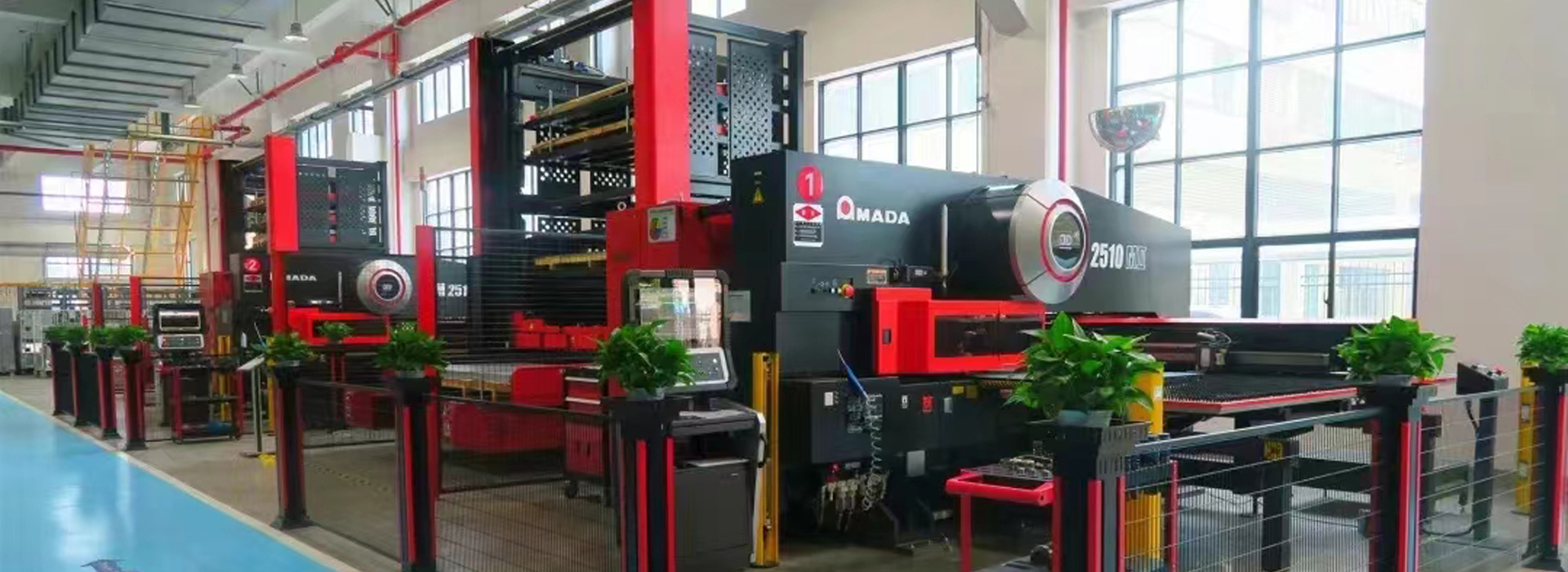
l AMADA 3015LVP-40CF laser — cuts up to 25mm steel, mostly used for 1-6mm sheet
l 6000W Baichao laser — backup and overflow work
l 2× AMADA AE2510 turret punches — for hole patterns and ventilation slots
l 8× Accurpress CNC brakes (40-300 ton) — the 300-ton handles our thickest server cabinet frames
l 1× 300-ton robotic bending cell — for repeat orders where setup time matters
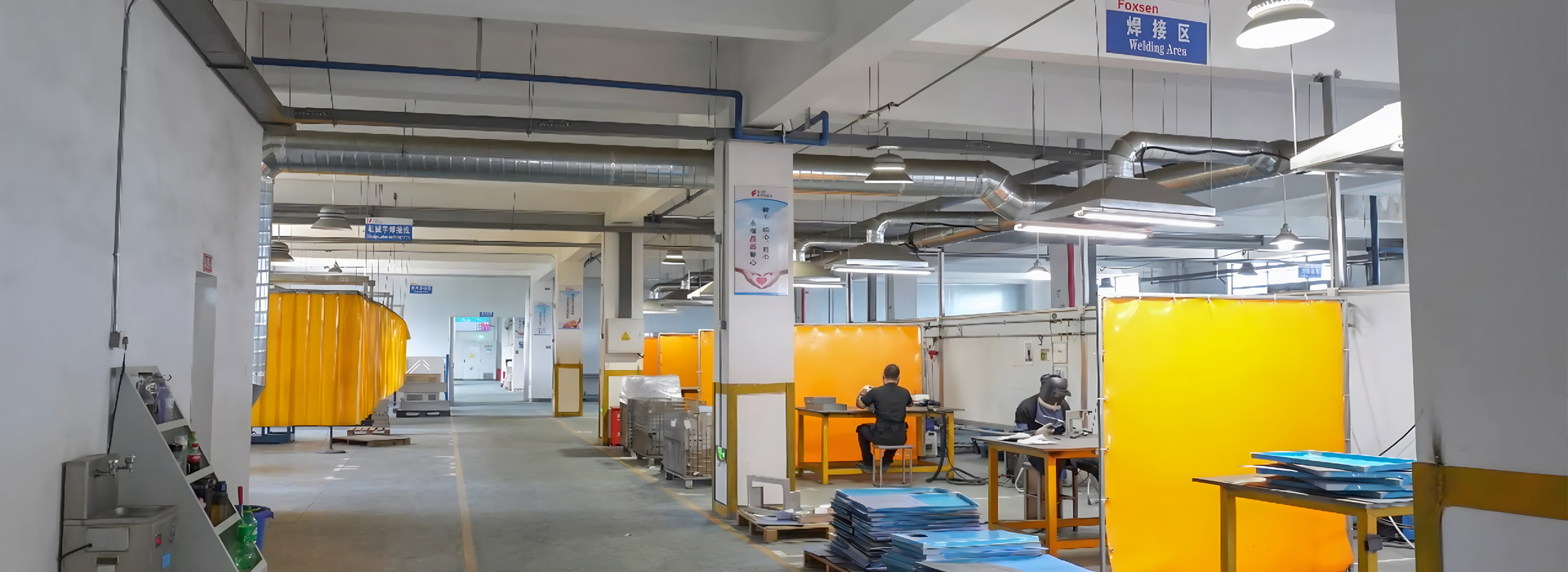
l Panasonic welders (MIG/TIG/spot) — 11 units total
l 2× Hyundai welding robots + 2× Yaskawa laser welding robots — used for battery enclosures and visible seams
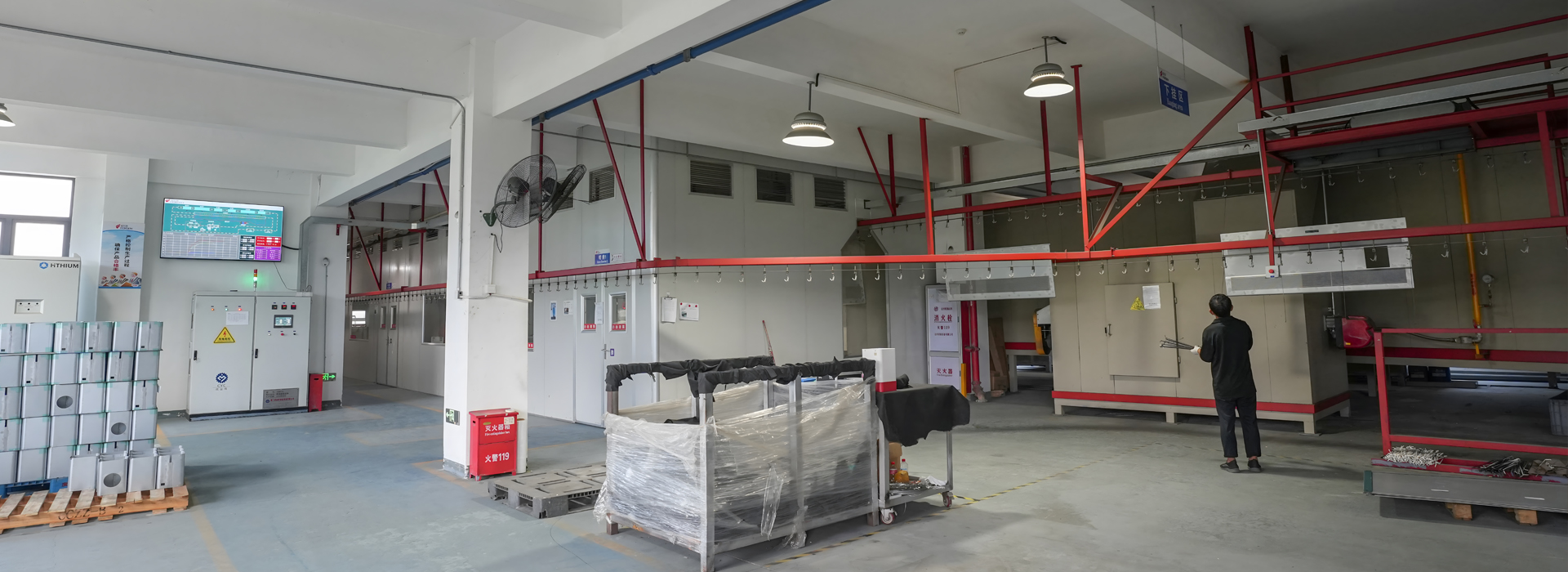
l 1× automatic powder coating line — 60-meter line, handles parts up to 2.5 meters
We added the MES system in 2024. Before that, tracking a part through the shop meant asking three people and checking a whiteboard. Now we scan barcodes. It's not exciting, but it works.
Quality Control (What Actually Happens)
Every order gets checked. Not because ISO 9001 says so — because reworking a 500-piece order costs more than checking it.
Incoming: Material certificates, thickness check with micrometer, visual for scratches.
In-process: First-piece inspection on every setup. Operators sign off. QC does spot checks.
Welding: Visual on 100%, penetrant testing on structural welds if requested.
Surface finish: Coating thickness (magnetic gauge), gloss meter, color difference meter. We keep records for 3 years.
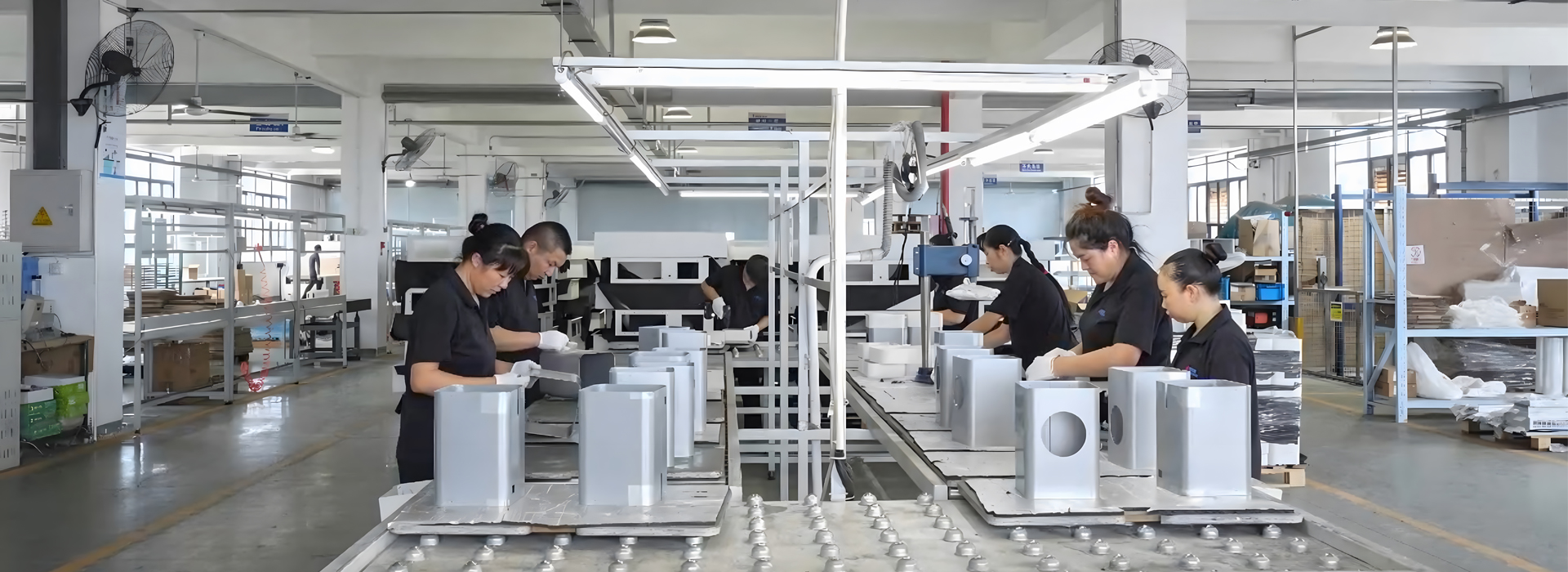
Final: CMM for critical dimensions, assembly check, function test (doors, locks, hinges).
Before shipment: Photos sent to client if requested. We've learned that a 2-minute video of the finished cabinet opening and closing prevents a lot of "this doesn't look right" emails.
Salt spray testing available. We have a chamber in-house. Most clients ask for 500 hours, some want 1000.
Who We Work With
We don't name clients publicly (NDAs), but here's the profile:
l European industrial OEMs — mostly Germany, Netherlands, Sweden. They care about documentation, traceability, and on-time delivery. The technical requirements are strict but rarely unreasonable.
l North American equipment builders — shorter lead times expected, more responsive communication needed.
l Australian solar/energy companies — growing segment, outdoor enclosures for harsh UV environments.
l A few Southeast Asian telecom contractors — price-sensitive, high volume.
The common thread: they tried 1-2 other Chinese suppliers first, had quality or communication issues, and found us through referral or trade show.
What Working With Us Looks Like
Week 1: You send drawings (STEP, PDF, whatever). We review, ask questions, flag potential issues. Usually 2-3 rounds of DFM feedback.
Week 2-3: Prototype if needed. 5-10 days for sheet metal, longer if tooling is involved.
Week 4: You approve prototype or request changes. We quote mass production.
Week 5-8: Production. Photos and reports sent mid-process if you want them.
Week 9: Final inspection, packing, shipping. FOB Xiamen or DDP if you prefer.
We don't do 24-hour quotes for complex assemblies. We do 24-hour quotes for parts we understand. For something new, we'd rather take 48 hours and get it right than guess and disappoint you later.
FAQ (The Honest Version)
Q: Can you make [specific part]? Send the drawing. If it's sheet metal, CNC, or welded assembly, probably yes. If it's die casting or plastic injection, we'll tell you who to call.
Q: What's your minimum order? Technically 1 piece. Practically, prototypes make sense at 1-10 units, production at 100+. Below 100, the per-unit cost hurts. We won't pretend otherwise.
Q: How do you handle quality problems? They happen. Last year we had a batch of server cabinets where the door gap was 3mm instead of 2mm. Client noticed on arrival. We remade 50 doors, air-shipped them, and paid the difference. We keep 2% of annual revenue aside for this kind of thing.
Q: Can you do [specific standard] certification? ISO 9001/14001/45001 — yes, we have them. UL or CE for specific products — depends on the product. We can guide you, but we don't certify for you.
Q: What's your real lead time? Sheet metal prototypes: 5-10 days. Production: 3-4 weeks for standard parts, 6-8 weeks if powder coating or assembly is complex. Shipping adds 3-5 weeks to Europe, 2-3 weeks to US West Coast.
Q: Why should we choose you over [competitor]? If price is your only criteria, we're probably not the cheapest. If you want a supplier who answers emails, admits mistakes, and has been doing this for 16 years without changing company name or disappearing — that's us.
Get a Quote
Email: Anne@xmfoxsen.com
WhatsApp/WeChat: +86 132 9592 1800
Send drawings, photos, or a rough description. We'll tell you if it's something we can do, what it will cost, and where the risks are. No charge for looking.
Address: No.108, Rongyuan Road, Tongan District, Xiamen, Fujian, China