

When Every Gram Counts
In industries where weight directly impacts performance—aerospace, electric vehicles, robotics—engineers face a constant trade-off. Strong materials tend to be heavy. Light materials lack strength. Aluminum CNC parts break this trade-off. They offer the strength-to-weight ratio that engineers dream about, combined with the precision that only computer-controlled machining delivers. From drone frames to battery housings, aluminum CNC parts are enabling designs that were impossible a decade ago.
Why Aluminum Becomes the First Choice
Not all metals are created equal for machining. Aluminum CNC parts start with alloys specifically formulated for cutting. 6061-T6 dominates general-purpose applications. It machines easily, accepts welding, and resists corrosion. 7075-T6 offers higher strength—comparable to mild steel—at only one-third the weight. For intricate features, 2024 provides excellent fatigue resistance. The common trait? All of them produce smooth chips, not stringy shavings, which means aluminum CNC parts come off the machine with better surface finishes and tighter tolerances.
The Speed Advantage
Steel is slow. Cutting steel requires low spindle speeds, frequent tool changes, and patience. Aluminum CNC parts run at three to five times the feed rate of steel. A typical CNC mill can rough aluminum at 200 inches per minute, compared to 40 ipm for steel. This speed translates directly to cost. When you order aluminum CNC parts, you pay for machine time. Less time means lower per-unit cost. That is why prototyping shops love aluminum—they can iterate quickly without breaking the budget.
Precision That Holds
Temperature changes cause materials to expand and contract. Steel moves less than aluminum, but aluminum's thermal conductivity is an advantage during machining. Heat from the cutting tool dissipates rapidly into the workpiece, preventing localized expansion that ruins accuracy. Aluminum CNC parts routinely achieve positional tolerances of ±0.025mm (0.001 inch) and surface finishes of 0.8µm Ra. For comparison, a human hair is 70µm thick. That level of precision allows aluminum CNC parts to serve as direct replacements for cast or forged components, but with tighter fit and no secondary finishing.
Common Thread: What Makes Aluminum Special?
The question engineers ask is not “Can we use aluminum?” but “Which aluminum alloy?” Each alloy family serves a different purpose in aluminum CNC parts:
1xxx series (pure aluminum): Soft, excellent conductivity. Used for electrical bus bars and heat sinks. Not strong enough for structural aluminum CNC parts.
6xxx series (6061, 6063): Best all-around. Weldable, anodizable, machinable. 90% of general-purpose aluminum CNC parts are 6061.
7xxx series (7075): High strength, used in aerospace and competitive cycling. Harder to machine but twice as strong as 6061.
5xxx series (5052, 5083): Marine-grade, excellent corrosion resistance. Used for stainless steel enclosure alternatives when weight matters.
Selecting the wrong alloy for aluminum CNC parts leads to cracked threads, distorted features, or premature corrosion.
Surface Finishes That Protect and Beautify
Raw aluminum develops a thin oxide layer naturally, but that layer is porous and uneven. Most aluminum CNC parts receive an engineered finish:
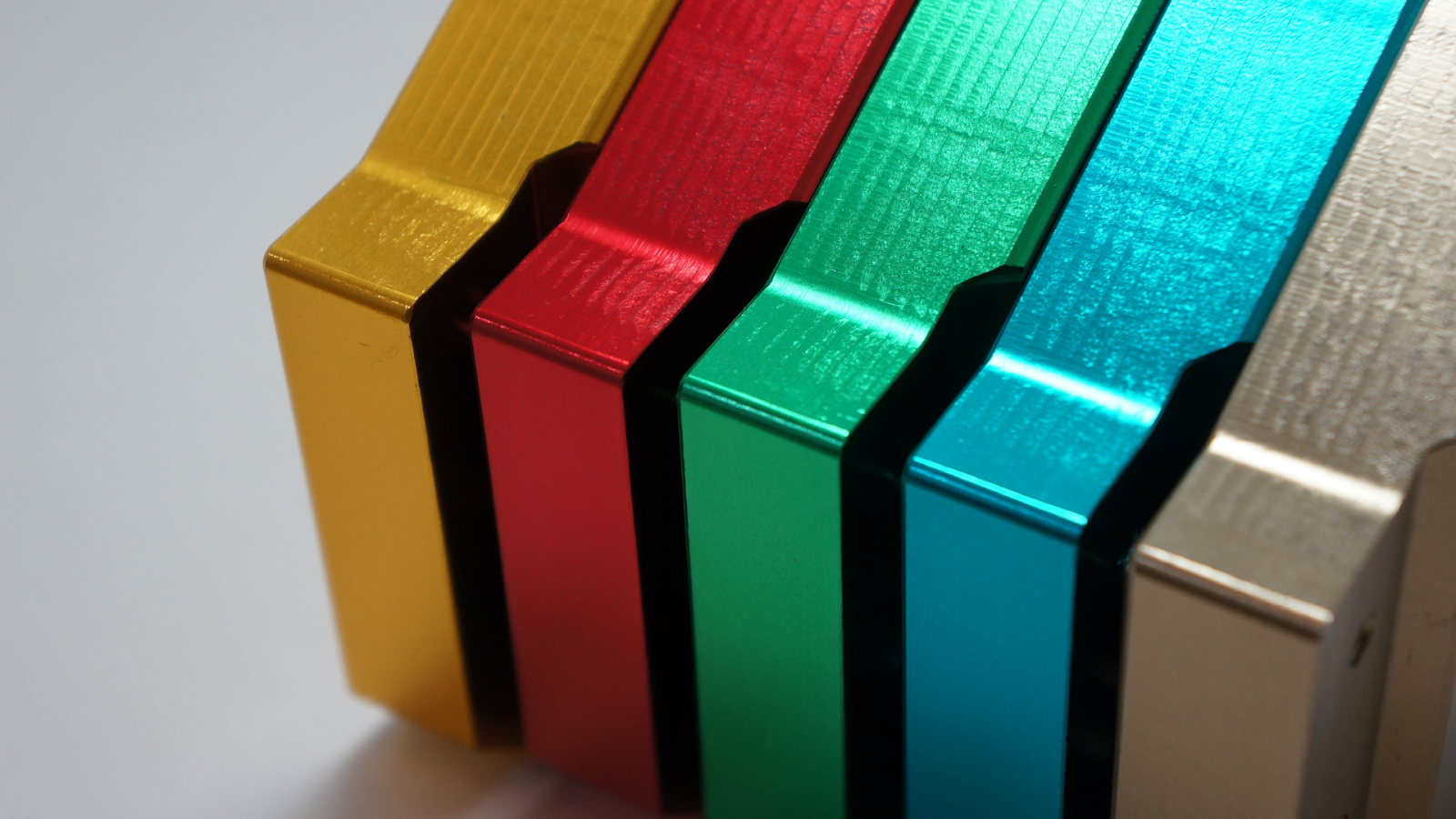
Clear anodize: The standard finish. Hardens the surface, resists scratching, and preserves the metallic look.
Type III hard anodize: Adds a dark, ceramic-like coating. Extremely wear-resistant. Used for aluminum CNC parts that see sliding contact or abrasive dust.
Powder coating: Adds color. Thicker than anodize, better for outdoor aluminum CNC parts that face UV and salt spray.
Chem film (Alodine): Thin, conductive coating. Used for aluminum CNC parts inside electronic enclosures where electrical grounding is required.
No finish at all is a mistake. Unfinished aluminum CNC parts will develop white powder (aluminum oxide) on the surface, which can flake off and contaminate nearby electronics.
Industries That Rely on Aluminum CNC Parts
Aerospace and Defense: Aircraft seat components, instrument panels, and structural brackets. Every kilogram saved reduces fuel burn by 0.3% annually. Aluminum CNC parts are everywhere inside a commercial jet—you just do not see them.
Electric Vehicles and Battery Systems: Battery trays, motor housings, and cooling plates. The shift to EVs has doubled demand for aluminum CNC parts in the last five years. Tesla, BYD, and Rivian all use machined aluminum for structural battery components. These parts integrate directly with battery enclosure designs, providing mounting points for cells and bus bars.
Medical Devices: Surgical instrument handles, MRI-compatible components, and implantable device housings. Aluminum is non-magnetic, light, and can be anodized in bright colors for instrument identification.
Consumer Electronics: Laptop bodies, smartphone chassis, and camera components. Apple popularized machined aluminum for electronics. Today, aluminum CNC parts appear in everything from headphones to gaming controllers.
Robotics and Automation: Robot arms, end effectors, and sensor mounts. Low inertia allows faster acceleration. Aluminum CNC parts let robot designers push speeds without upsizing motors.
The Cost Equation: Machined vs. Cast vs. Printed
A common misconception is that casting or 3D printing always costs less than aluminum CNC parts. The truth depends on quantity and complexity:
Under 100 pieces: CNC machining wins. No mold costs, no print setup fees. Aluminum CNC parts are ready in days, not weeks.
100 to 1,000 pieces: The decision depends on geometry. Simple shapes favor CNC. Complex, hollow forms favor casting or printing.
Over 1,000 pieces: Hard tooling becomes economical, but many customers still choose aluminum CNC parts because they can change designs without scrapping expensive molds.
The hidden advantage of aluminum CNC parts is design freedom. No draft angles, no parting lines, no minimum wall thickness restrictions. If you can draw it, a CNC machine can cut it.
Quality Assurance for Critical Applications
When aluminum CNC parts go into aerospace or medical devices, every piece must be verified. Reputable shops provide:
First article inspection reports: Full dimension check on the first part from each production run.
Cpk data: Statistical proof that the process holds tolerances.
Material certifications: Mill test reports confirming alloy and temper.
Coating thickness measurement: For anodized or plated aluminum CNC parts.
Shops that combine aluminum CNC parts with metal stamping service and CNC machining parts under one roof offer streamlined quality control—one supplier, one audit, one warranty.
Design Tips for Better Aluminum CNC Parts
Engineers can reduce cost and lead time by following a few rules:
Avoid sharp inside corners. Use a radius at least 1.5 times the cutter diameter.
Standardize hole sizes. Drill bits are cheaper than custom end mills. Use common metric or imperial diameters.
Limit depth-to-diameter ratio. Holes deeper than 6 times diameter require special tooling.
Indicate critical dimensions. Not every feature needs ±0.025mm. Specify tight tolerances only where necessary.
Following these rules can cut the cost of aluminum CNC parts by 30-40% without changing the final function.
Conclusion
Aluminum CNC parts are not a commodity. They are engineered components that require alloy selection, process planning, toolpath optimization, and finishing decisions. When done right, they deliver strength, precision, and lightweight performance at a competitive cost. As industries push for higher efficiency and lower emissions, the demand for aluminum CNC parts will only grow. Whether you need a single prototype or 50,000 production units, understanding the material, the process, and the finishing options turns a simple block of aluminum into a high-performance solution.