

Against the backdrop of the global manufacturing industry's shift towards high-complexity, high-mix production models, standardized components are increasingly insufficient to meet the growing demands for personalization and performance optimization. This trend has propelled a key manufacturing technology to the forefront: Custom Metal Stamping. Distinct from high-volume, standardized stamping, Custom Metal Stamping focuses on providing a complete solution—from tooling development to part production—tailored to a client's unique design, functional requirements, and application context. This article delves into the value proposition, technical process, broad applications, and central role of Custom Metal Stamping in driving innovation across industries.
I. Core Value: An Engineering Solution Beyond Standardization
The essence of Custom Metal Stamping is engineering practice born to solve specific problems. When off-the-shelf parts fail to meet design requirements in terms of dimensions, shape, strength, material, or integration level, custom stamping becomes the path of choice. Its core value is multi-dimensional:
Design Freedom and Functional Integration: Through Custom Metal Stamping, engineers can consolidate multiple traditional parts into a single, complex stamped component. This design approach reduces assembly steps, lowers the total part count, and enhances overall structural integrity and reliability. For instance, a well-designed custom stamped bracket can simultaneously provide mounting, heat dissipation, and electromagnetic shielding functions.
Precise Material and Performance Matching: Clients can select specific grades and tempers of metal materials—such as various grades of high-strength steel, stainless steel, aluminum, or copper alloys—based on application demands like mechanical stress, corrosion resistance, conductivity, or weight constraints. The Custom Metal Stamping process can be specifically optimized for the properties of these chosen materials.
Cost-Effectiveness and Supply Chain Optimization: For medium-to-low volume production needs, while there is an initial tooling investment, the high efficiency, low scrap rates, and reduced secondary operations (like welding, fastening) and assembly costs offered by Custom Metal Stamping often result in a better total cost of ownership over the project lifecycle. It also simplifies supply chain management.
Rapid Response and Prototyping Support: Modern Custom Metal Stamping service providers typically possess capabilities for rapid tooling and prototype production. This allows them to align with clients' product development cycles, quickly providing samples for testing and validation, thereby accelerating time-to-market.
II. Technical Process: The Precision Journey from Concept to Part
A successful Custom Metal Stamping project is the result of interdisciplinary collaboration, following a highly systematic process:
Requirement Analysis and Collaborative Design: This is the foundation. The supplier's engineers must work closely with the client to understand the part's end use, load conditions, assembly interfaces, etc. Guided by Design for Manufacturability principles, both parties collaboratively optimize the part design to make it suitable for the stamping process while meeting functional needs, thus controlling costs and ensuring quality.
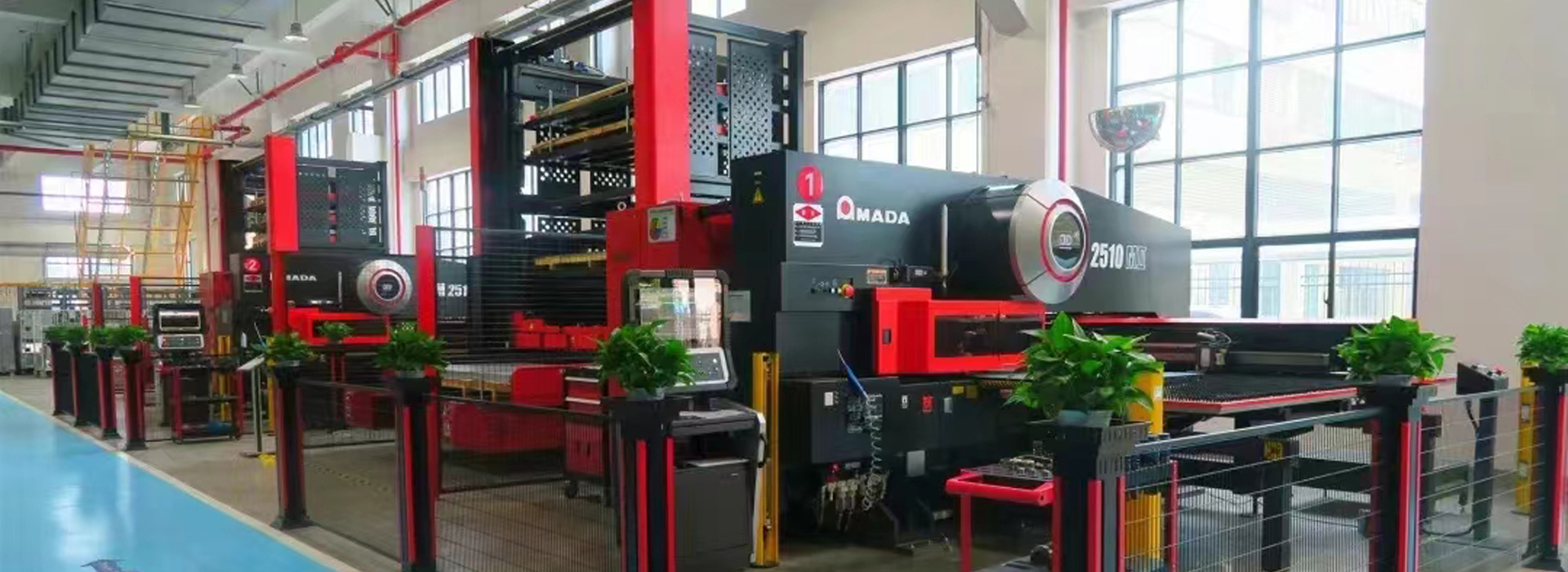
Precision Tool & Die Design and Manufacturing: The die is the soul of Custom Metal Stamping. Advanced CAD/CAE software is used for die design, with simulation analysis predicting material flow, forming forces, and potential defects (like wrinkling or tearing). Die manufacturing relies on high-precision CNC Machining Parts technology to achieve micron-level tolerances for cavities and punches. For complex parts, a multi-station progressive die may be required to sequentially perform all operations—blanking, bending, drawing, forming—within a single die set.
Process Development and Trial Production: After die installation on the press, rigorous process debugging is essential. This involves determining optimal stamping speed, blank holder force, lubrication strategy, and material feed accuracy. First-off samples from trial production undergo strict dimensional measurement and functional testing to ensure full compliance with drawing specifications.
Volume Production and Quality Control: During volume production, modern Custom Metal Stamping lines are often equipped with automated feeding systems and in-line inspection devices to ensure production rhythm and consistency. Key dimensions are monitored using Statistical Process Control to guarantee the stability of every batch.
III. Cross-Industry Applications: Enabling Product Innovation
The adaptability of Custom Metal Stamping makes it a behind-the-scenes driver of innovation in numerous sectors:
Automotive Industry: From internal connectors and motor housings for new energy vehicle battery packs, to reinforcement plates, seatbelt buckles, and sensor housings in traditional vehicles, the demands for lightweighting and high performance rely heavily on custom stamping.
Electronics & Telecommunications: RF shielding cans for 5G base stations, server heat sinks, connector terminals, and internal structural components for various Electronic Enclosures, which have stringent requirements for precision and electromagnetic performance, are classic applications of Custom Metal Stamping.
Medical Devices: Components for surgical instruments, precision structural parts in imaging equipment, and housings for diagnostic devices must meet rigorous standards for biocompatibility, cleanliness, and reliability—criteria that custom stamping is well-suited to fulfill.
Energy & Industrial: Mounting brackets for solar inverters, ventilated grilles for electrical cabinets, and metal housings for industrial sensors, which must endure harsh environments over the long term, often derive their rugged durability from custom stamping.
Consumer Products: Control panels for premium appliances,外壳 for smart home devices, and critical components for power tools benefit from the aesthetics, durability, and functionality enabled by custom stamping processes.
IV. Future Outlook: Deep Integration with Digitalization and Automation
Looking ahead, the evolution of Custom Metal Stamping will be deeply intertwined with macro trends in manufacturing:
Digitalization and Intelligence: Digital twin technology will encompass the entire workflow from die design to stamping production, enabling virtual commissioning and predictive optimization of process parameters. Artificial Intelligence will be applied to automatic defect recognition and autonomous optimization of the process window.
Advanced Material Processing: As lightweight alloys and ultra-high-strength materials see wider adoption, associated Custom Metal Stamping processes like hot stamping and hydroforming will grow in importance.
Sustainable Manufacturing: Optimizing nesting designs, using recyclable materials, and improving lubrication technologies to reduce environmental footprint will become part of industry standards.
Conclusion
In summary, Custom Metal Stamping is far more than simple contract manufacturing; it is a systemic capability deeply integrating design engineering, materials science, and precision manufacturing. It grants product designers unprecedented freedom to transform innovative ideas into reliable, efficient, and cost-competitive physical realities. In an era emphasizing differentiated competition and rapid iteration, partnering with an experienced and technologically comprehensive Custom Metal Stamping provider has become a key strategic asset for companies aiming to successfully bring innovative products to market. Its role is evolving from a passive parts supplier to an active co-developer and value creator in the product innovation process.