
 Industry Evolution and Market Landscape
With exponential growth in AI computing power demand, server hardware is undergoing a fundamental shift from generalization to deep customization. The Custom Server Case, as the core physical carrier for computing, storage, and networking functions, directly influences data center cluster operational efficiency. According to TrendForce data, benefiting from increased cloud service provider capital expenditure and rising sovereign clouds, global AI server shipments are expected to grow over 20% annually, directly driving strong demand for high-performance Custom Server Cases.
In traditional server markets, standardized cases once dominated. However, AI training clusters impose stringent requirements on GPU density, cooling capacity, and power management, making standard products insufficient for differentiated scenarios. Deep customization is becoming key to competition, with modular design, precision manufacturing, and rapid response capabilities emerging as core metrics for evaluating Custom Server Case supplier competitiveness.
Application-Driven Customization Requirements
Different scenarios impose distinct technical requirements on Custom Server Cases.
AI training scenarios face GPU cooling as the greatest challenge. Single-chip Thermal Design Power has risen from 700W to over 1000W. Leading solutions employ liquid-cooled server cases, improving cooling efficiency by 60% through optimized structure while reducing volume by 25%, helping achieve industry-leading compute density. Such Custom Server Cases employ dedicated airflow channels and high-static-pressure fans, ensuring stable inlet temperatures under high loads.
Edge computing scenarios deploy in space-constrained environments, requiring Custom Server Cases with compact design, wide operating temperature ranges, and vibration resistance. Front-access maintenance, dust filters, and lockable panels ensure long-term stable operation in unattended environments.
High-density storage scenarios drive Custom Server Cases toward higher drive-bay counts. 24-bay cases integrate high-speed backplane technology, achieving tens of thousands of concurrent operations. This imposes higher demands on signal integrity and power stability.
Revolutionary Breakthroughs in Thermal Management
Thermal management represents the most technically sophisticated aspect of Custom Server Case design. Rack power density escalates from kilowatts to megawatts, pushing traditional air cooling toward physical limits. TrendForce predicts liquid cooling penetration for AI chips will reach 47% by 2026.
Liquid cooling integration follows three paths: cold plate cooling removes over 90% of heat through water blocks contacting chips; immersion cooling submerges servers in dielectric fluid; hybrid cooling combines air and liquid. Microsoft has proposed microfluidic cooling technology, advancing cooling refinement.
For scenarios unable to deploy liquid cooling, optimized airflow organization significantly improves efficiency. Through hot aisle containment and airflow guides, PUE can be reduced from 2.1 to 1.3, imposing higher requirements on Custom Server Case sealing and airflow path design.
Modular Design and Power Architecture Innovation
Modular design reshapes Custom Server Case product logic. Through standardized partitioning, a single platform adapts to multiple scenarios through configuration variations, reducing product changeover time by 75% and spare parts inventory by 60%.
Power architecture is undergoing a paradigm shift from AC to DC. 800V high-voltage DC architecture maximizes efficiency, reduces copper cable usage, and enables more compact designs. This requires Custom Server Case adaptation in busbar design and insulation protection. Third-generation semiconductor SiC/GaN penetration is expected to reach 17% by 2026, posing new challenges for electromagnetic compatibility design.
Material Technology and Intelligent Management
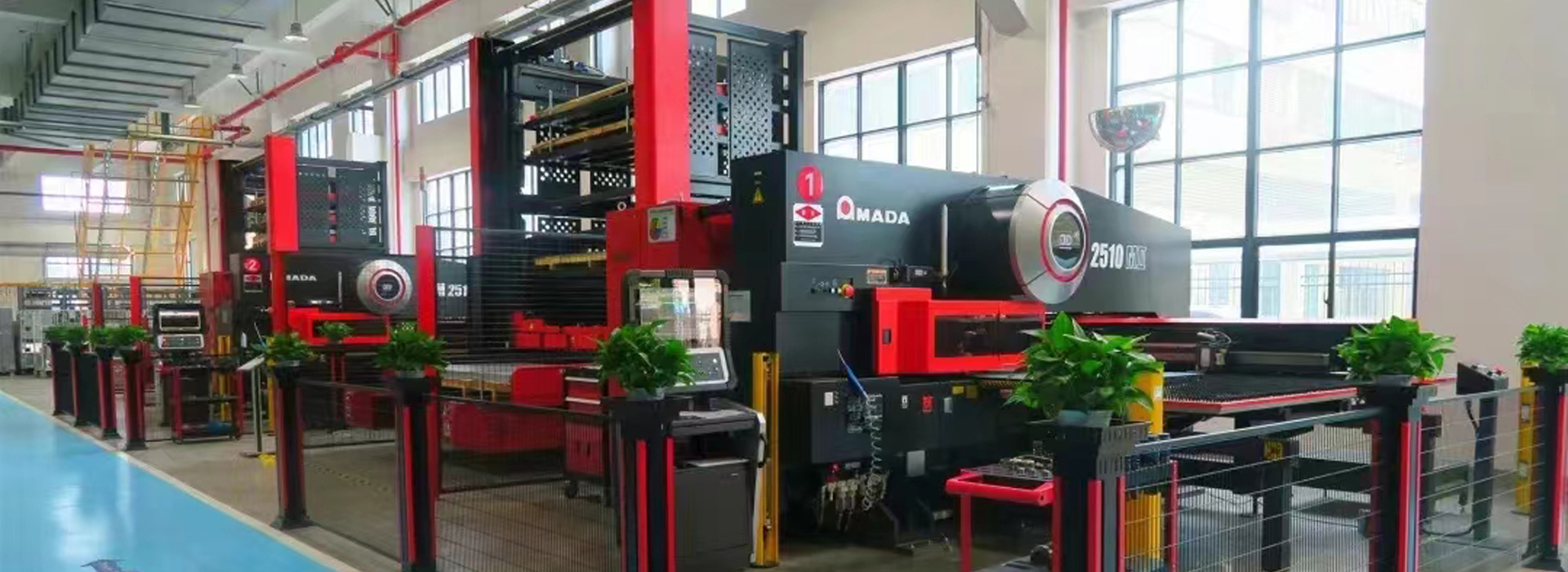
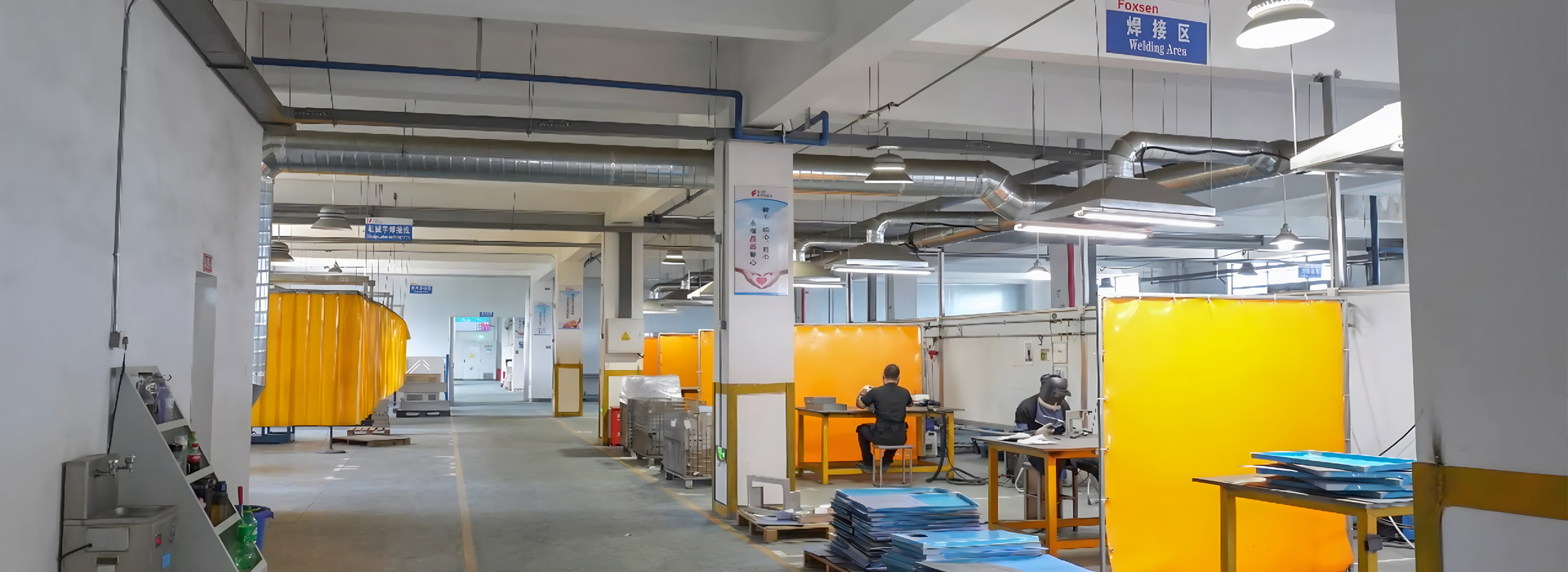
High-strength aluminum alloy combined with galvanized steel achieves weight reduction while maintaining structural strength. CNC machining technology produces high-precision interface panels, controlling tolerances to micron levels.普及 of laser cutting and CNC bending enables Custom Server Cases to achieve more sophisticated ventilation designs.
Modern Custom Server Cases have evolved from passive containers to intelligent nodes. Integrated temperature sensors, door switches, and power monitoring modules enable real-time operational status upload. Some designs support BMC/IPMI remote management, enabling out-of-band monitoring.
Front-access maintenance allows drive and fan replacement without extraction, dramatically reducing maintenance time. Tool-less slides and blind-mate power connectors make field operations more efficient, reducing Mean Time To Repair by over 60%.
Industry Standards and Future Outlook
Custom Server Case design must comply with IEC 61439, UL 2416, and other international standards. RoHS, REACH, and other environmental compliance requirements are also necessary for market entry.
Looking forward, co-packaged optics technology may transform internal interconnection architectures, achieving higher bandwidth and lower power consumption. Technology roadmaps predict that by 2028, 30% of high-end server cases will incorporate additively manufactured components, driving customization to higher levels.
Conclusion
The Custom Server Case has evolved from a mere physical enclosure into a comprehensive technology platform integrating thermal management, power distribution, intelligent monitoring, and structural engineering. In the浪潮 of deep integration between AI and the digital economy, deep customization capabilities are becoming core competitive advantages for server hardware suppliers. Selecting a Custom Server Case partner with advanced design capabilities and rapid response capability will be a key strategic decision in ensuring computing infrastructure is secure and efficient.