
Metal Bending Services: Precision Shaping for Modern Manufacturing

From Flat Sheet to Finished Component
Every metal enclosure, bracket, or structural frame starts as a flat sheet. The transformation from two dimensions to three is the work of metal bending services. This process is not as simple as pressing a sheet against a die. Modern metal bending services involve CNC-controlled press brakes, real-time angle measurement, and compensation for material springback. Without these, a bent part may look correct but fail to fit its assembly.
How Bending Differs from Stamping and Rolling
Customers often confuse bending with other forming methods. Metal bending services specifically refer to creating angular features—V-shapes, U-channels, boxes, and offsets. Unlike stamping, which uses a die set to cut or form in a single stroke, bending is incremental. Unlike rolling, which creates curves, bending produces sharp or radiused corners.
A typical order for metal bending services includes:
Flanges on an electronic enclosure for mounting.
Chassis frames for stainless steel enclosure assemblies.
Brackets and supports inside a battery enclosure.
Complex multi-bend parts for automotive or solar applications.
The Machines Behind the Process
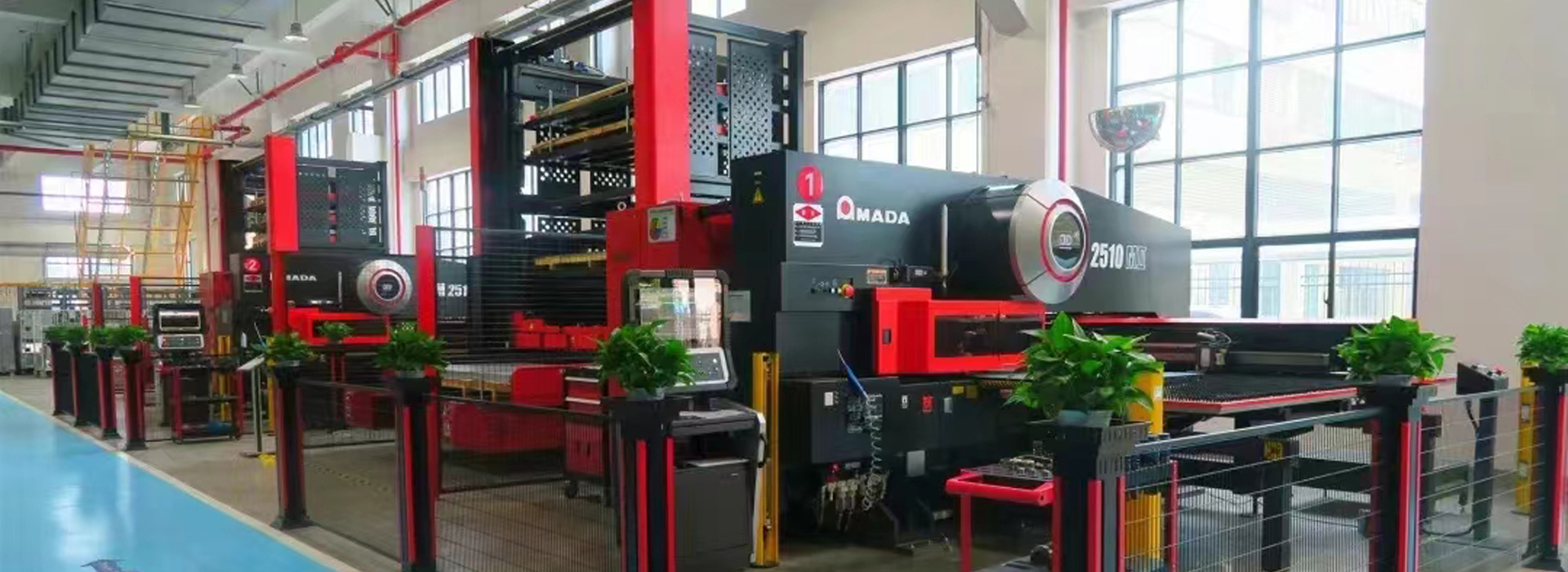
Precision metal bending services rely on three machine types:
Hydraulic press brakes: Traditional workhorses. They use hydraulic cylinders to drive a punch into the material. Hydraulic metal bending services can handle thick plates (up to 25mm) but are slower and less energy-efficient.
Electric press brakes: Servo-electric machines use motors and ball screws. They are faster, more accurate, and consume 50-70% less energy. Electric metal bending services excel for thin to medium gauges (0.5-8mm), common in CNC machining parts and sheet metal fabrication.
Tandem press brakes: For extra-long parts (over 6 meters), two synchronized presses work together. Tandem metal bending services produce consistent bends across the entire length of a large switchgear enclosure panel.
The Role of Tooling
No discussion of metal bending services is complete without tooling. The punch (top tool) and die (bottom tool) determine the bend radius and angle.
V-dies: Most common. The sheet is forced into a V-shaped opening. The V-die width should be 8-10 times material thickness for optimal results.
Gooseneck punches: Clear flanges and existing bends, allowing complex sequential bending.
Radius dies: Produce rounded bends, often for cosmetic or safety edges.
Hemming tools: Fold the sheet onto itself, creating a safe, rolled edge.
A shop offering metal bending services must stock hundreds of tool lengths and angles. Quick-change tooling systems reduce setup time from hours to minutes.
Springback: The Hidden Variable
Every material tries to return to its original flat shape after bending. This is springback. Steel springs back less than aluminum; stainless steel springs back more than mild steel. Skilled metal bending services compensate by over-bending—usually 0.5-3 degrees extra, depending on material and thickness.
Modern metal bending services use CNC controls with springback tables and real-time angle measurement (laser or optical sensors). The machine adjusts the ram depth on the fly. Without this compensation, a part that measures 90 degrees off the press may spring open to 92 degrees, ruining the fit.
Bending Tolerances: What Is Achievable?
Standard metal bending services hold angular tolerances of ±1 degree. For precision work—aerospace, medical, or electronic enclosure components—tolerances can reach ±0.5 degrees. Length tolerances (bend-to-bend) typically run ±0.2mm for short parts, ±0.5mm for longer ones.
Customer drawings should specify:
Critical bend angles and location dimensions.
Acceptable bend radius (inside or outside).
Grain direction (bending across the grain reduces cracking).
Shops that combine metal bending services with metal stamping service and CNC machining parts offer one-stop fabrication, eliminating tolerance stacking from multiple suppliers.
Materials Commonly Bent
Almost any ductile metal can be bent, but each has quirks:
Aluminum (5052, 6061): Bends easily but cracks if bent across the grain. 5052 is more formable than 6061-T6. Annealed aluminum accepts tighter radii.
Steel (mild, galvanized): Predictable springback. Galvanized steel sheet bends well but requires tooling that does not scratch the zinc coating.
Stainless steel (304, 316): High springback and high tonnage requirements. A stainless steel enclosure with complex bends must be designed with larger radii to avoid cracking.
Copper and brass: Very ductile. Copper busbars are bent for tinned copper bus bar assemblies. Radius tools prevent excessive work hardening.
Design for Manufacturability
Customers who understand metal bending services can reduce costs significantly. Follow these rules:
Minimum flange length: Typically 4-5 times material thickness. Shorter flanges cannot be gripped.
Avoid sharp internal corners: Use a radius at least half the material thickness to prevent cracking.
Uniform bend direction: Bending all flanges in the same direction reduces setup changes.
Hole placement: Holes closer than 2.5 times material thickness to a bend may distort. Elongate holes or move them.
Applying these guidelines to a battery enclosure design can cut bending costs by 30% without altering function.
Quality Checks After Bending
Reputable metal bending services include post-process inspection:
Angle verification: Protractor or coordinate measuring machine (CMM) for critical bends.
Flatness check: A bent part should sit flat on a surface plate. Twisted parts indicate uneven bending or incorrect tool alignment.
Crack detection: Visual or dye penetrant for high-strength alloys.
Some shops offer 3D laser scanning of first articles, comparing the bent part directly to the CAD model. This catches errors before mass production.
Applications Across Industries
Metal bending services support nearly every manufacturing sector:
Electronics: Chassis for servers, networking gear, and electronic enclosure boxes. Thin-gauge aluminum with tight tolerances.
Automotive: Brackets, heat shields, and structural reinforcements. High-strength steel requiring heavy press brakes.
Renewable energy: Mounting rails for solar panels, frames for battery enclosure racks, and inverter cabinets. Long parts needing tandem presses.
Medical: Carts, stands, and instrument housings. Stainless steel with cosmetic finishes.
Construction: Electrical panels, junction boxes, and ductwork. Galvanized steel with simple bends.
When to Outsource vs. In-House
Small manufacturers face a choice: buy a press brake or outsource metal bending services. The breakeven point is usually around 500-1,000 hours of annual bending time. Below that, outsourcing saves capital and floor space. Above that, in-house bending may pay off.
Advantages of outsourcing metal bending services:
Access to multiple press brake sizes (30-ton to 500-ton).
Experienced operators who avoid common mistakes.
No tooling inventory or maintenance costs.
Shorter lead times for rush orders (shared capacity).
The Future: Automated Bending Cells
The next generation of metal bending services uses robotic press brakes. A robotic arm picks a flat blank from a stack, positions it against backgauges, and presents it to the press. After each bend, the robot repositions the part. The cell runs unattended for hours. These cells cut labor costs and eliminate human error. For high-volume parts, automated metal bending services reduce per-part cost by 30-50%.
Conclusion
Metal bending services turn flat sheets into functional, three-dimensional components. Success depends on machine capability, tooling selection, springback compensation, and quality inspection. Whether you need a single prototype or 100,000 production parts, choosing the right metal bending services provider—one with modern presses, skilled operators, and integrated quality control—ensures your bent parts fit perfectly the first time.