


A Hole Is Never Just a Hole
In sheet metal fabrication, the punching process is often taken for granted. Need a hole for a screw? Punch it. Need a ventilation grill? Punch a pattern. Need a cutout for a display? Punch it. But engineers know that a poorly executed punching process leaves burrs, distorts flatness, and creates stress risers that crack over time. When done right, the punching process produces clean edges, precise dimensions, and parts that fit perfectly into electronic enclosure assemblies. This article examines what separates good punching from bad, and why the punching process deserves more respect in the design phase.
How Punching Differs from Other Cutting Methods
Many people confuse punching with laser cutting or waterjet cutting. The distinction is simple: laser and waterjet remove material by melting or eroding; the punching process shears the metal using a punch and die. A punch descends into a die opening slightly larger than the punch. The metal fractures along a controlled line. This shearing action work-hardens the cut edge, which can be beneficial for wear resistance but problematic for subsequent forming.
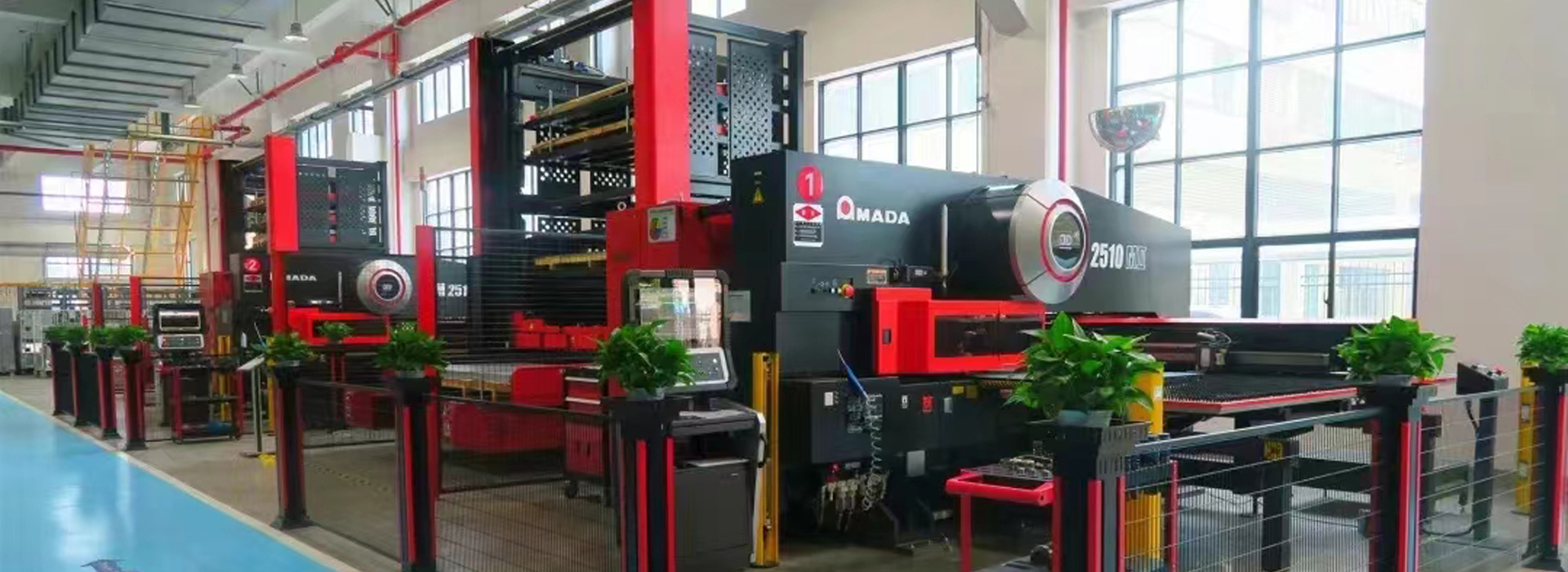
The punching process is fast—a modern CNC turret punch press can cycle 600 times per minute. It is also economical for medium to high volumes. For holes under 50mm diameter and materials up to 6mm thick, the punching process typically costs less than laser cutting. However, the punching process requires dedicated tooling for each hole shape and size. That is where CNC machining parts thinking merges with stamping: a standard tool library (rounds, squares, rectangles, special shapes) allows thousands of hole combinations without custom tooling.
The Anatomy of a Quality Punching Operation
A successful punching process depends on three variables: clearance, alignment, and stripping force.
Clearance: The gap between punch and die must match the material thickness. Too much clearance creates a ragged, burred edge. Too little clearance overworks the press and can cause punch breakage. For mild steel, the rule of thumb is 10-15% of material thickness per side. For stainless steel, closer to 15-20%. For aluminum, 8-12%. A punching process running with incorrect clearance produces parts that fail visual inspection and cause assembly issues.
Alignment: Punch and die centerlines must be perfectly coaxial. Misalignment as small as 0.05mm creates uneven shear, accelerated tool wear, and off-center holes. Modern turret presses use precision-ground guide bushings and hydraulic clamping to maintain alignment over millions of cycles.
Stripping Force: After the punch penetrates the material, the scrap or part often sticks to the punch. A stripper plate pushes the material off. Insufficient stripping force causes double-hitting—the punch strikes the same area twice, deforming the part.
When all three are optimized, the punching process produces a cut zone with three distinct regions: a burnished band (smooth, shiny), a fracture band (rough, matte), and a tiny burr. Acceptable limits depend on the application. For a metal stamping service supplying parts to a battery enclosure assembly line, the burr height must stay below 0.1mm to avoid scratching insulation coatings.
Common Defects and How to Avoid Them
Even a well-tuned punching process can produce defects. Here are the most frequent:
Rollover: A rounded depression at the punch entry. Caused by excessive clearance or dull punch. Fix: reduce clearance or sharpen tools.
Burr: A raised ridge at the die exit. Caused by worn die or too much clearance. Fix: regrind die or adjust clearance.
Slug pulling: The punched-out scrap lifts back onto the punch, then is dragged into the next hole. Caused by insufficient stripping or vacuum effect. Fix: add a spring-loaded ejector or use slug-retention coatings.
Camber distortion: The sheet bends after multiple punches. Caused by unbalanced tooling forces. Fix: sequence punches from center outward or use a leveling station.
Experienced fabricators build these fixes into the punching process upfront, rather than discovering them during production.
Tooling Materials and Coatings
The punching process is hard on tools. Punches and dies experience compressive stress, adhesive wear, and thermal cycling. Standard tool steel (D2, A2) works for mild steel and aluminum up to 100,000 hits. For high-strength steel or stainless steel, powder metallurgy steels (CPM, M4) last 3-5 times longer. Coatings extend life further:
TiN (titanium nitride): Reduces friction, good for aluminum and copper.
TiCN (titanium carbonitride): Harder, better for stainless.
AlTiN (aluminum titanium nitride): Heat resistant, ideal for high-speed punching.
A properly coated tool in a punching process can deliver 500,000 to 1,000,000 hits before regrinding.
Applications Across Industries
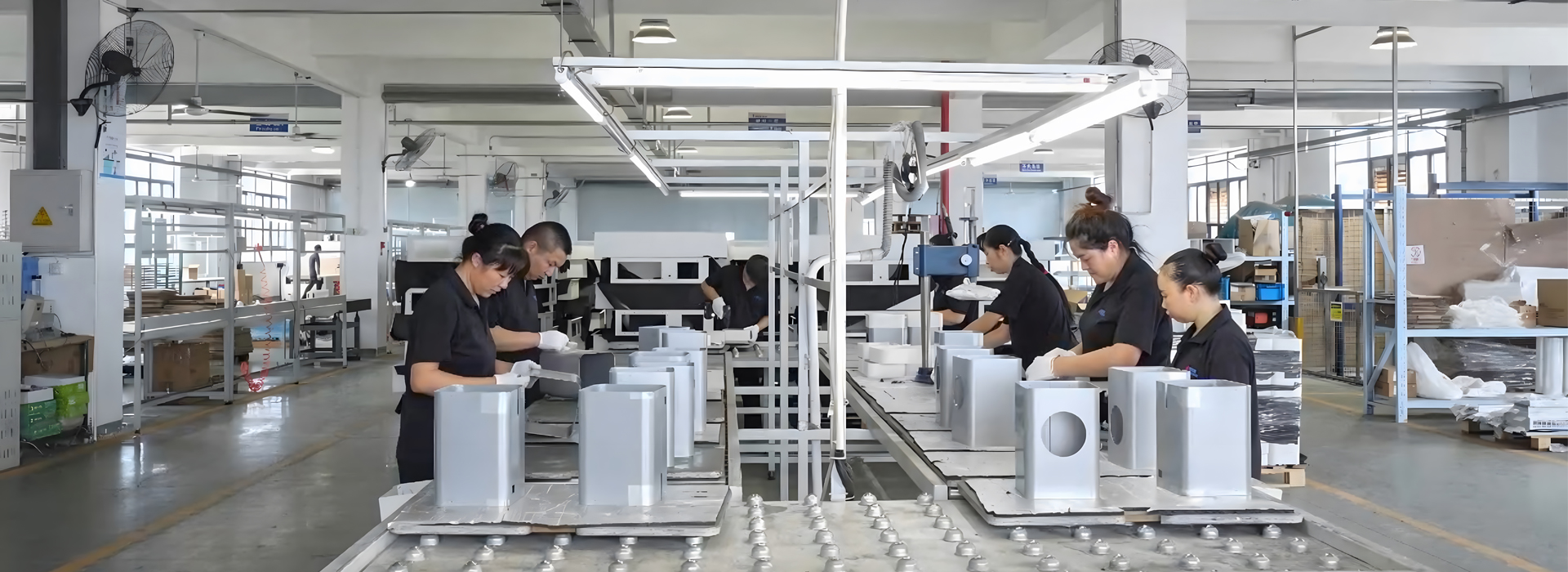
The punching process appears wherever sheet metal components are made. In electronic enclosure manufacturing, punching creates mounting holes, ventilation louvers, and cable entry knockouts. In stainless steel enclosure fabrication, punching produces precise cutouts for displays and controls. In automotive, punching forms brackets, seat belt anchors, and dashboard structural supports. In renewable energy, the punching process cuts busbar holes and mounting slots for battery enclosure racks.
When to Choose Punching Over Other Processes
As a rule of thumb:
Use punching for hole diameters 0.5x to 3x material thickness, when quantity exceeds 500 pieces, and when edge quality requirements are moderate (no secondary finishing).
Use laser cutting for complex contours, prototype quantities, or materials too thick or hard for punching.
Use drilling for small quantities or when hole position tolerance is extremely tight (±0.02mm).
The punching process shines in high-mix, medium-volume production. A CNC turret press with a 30-station tool carousel can change tools in under one second, punching different hole patterns on the same sheet without stopping.
Recent Advances in Punching Technology
Two innovations have modernized the punching process in recent years. First, servo-electric presses replace hydraulic or mechanical drives. Servo presses offer programmable ram speed and position, reducing noise, saving energy, and allowing “dwell” (pausing at bottom of stroke) to reduce springback. Second, intelligent tool monitoring uses sensors to detect punch wear and breakage in real time, automatically flagging bad parts or stopping production.
These advances make the punching process more reliable and more economical for small batch sizes—sometimes as low as 10 pieces—blurring the line between punching and laser cutting.
Conclusion
The punching process is not a relic of old-school fabrication. It is a high-speed, precision metal forming technique that, when properly engineered, delivers consistent, burr-free holes at lower cost than any alternative for the right applications. Understanding clearance, alignment, stripping, tooling, and defect prevention turns the punching process from a black art into a predictable manufacturing tool. Whether you are building electronic enclosures, battery enclosures, or automotive components, mastering the punching process pays off in quality, speed, and cost control.