

Industry Overview
The server chassis serves as the fundamental physical backbone of modern data centers, providing structural integrity, thermal management, and connectivity framework for mission-critical hardware. According to Omdia, the global server chassis market reached approximately $8.2 billion in 2025, with projections indicating steady growth through 2029. This expansion is driven by hyperscale data center construction, enterprise IT modernization, and increasing computational demands of AI workloads.
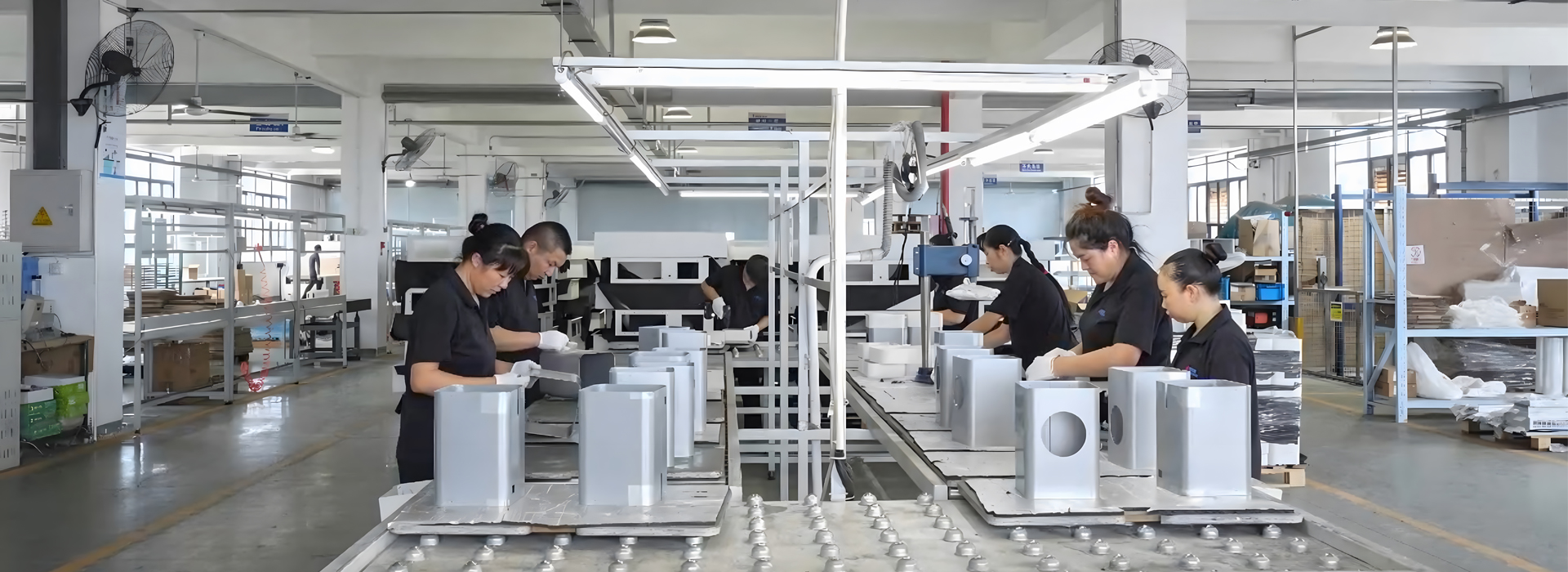
Unlike consumer computer cases, a server chassis is engineered for continuous operation in dense, thermally challenging environments. Design priorities include maximizing component density, ensuring unimpeded airflow, facilitating rapid maintenance, and meeting stringent international safety standards.
Mechanical Architecture
The structural design of a server chassis must satisfy conflicting requirements: maximum rigidity with minimum weight, high component density with adequate airflow, and secure mounting with easy service access. Most enterprise-grade chassis utilize cold-rolled steel for the main frame, offering excellent strength-to-cost characteristics and magnetic shielding. For weight-sensitive deployments, aluminum alloys provide significant weight reduction while maintaining structural integrity.
The chassis form factor determines rack compatibility. The EIA standard 19-inch width remains dominant, with height measured in rack units (U)—each U being 1.75 inches. Common server chassis heights include 1U for dense compute, 2U for balanced configurations, and 4U for storage-intensive or GPU-accelerated workloads.
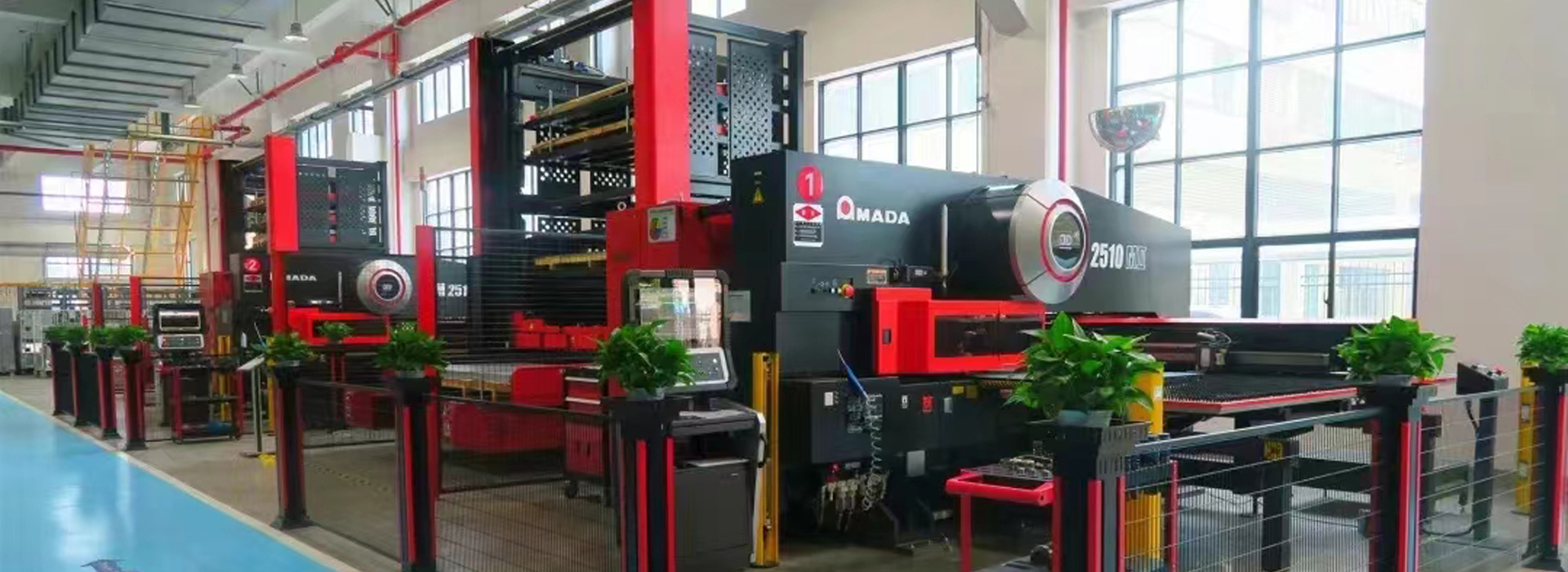
Precision manufacturing processes are essential for achieving tight tolerances. Laser cutting ensures accurate panel dimensions, while CNC bending maintains consistent angles. These processes, often provided by specialized metal stamping service providers, guarantee dimensional specifications necessary for reliable operation.
Thermal Management
Thermal management represents the most technically challenging aspect of server chassis design. Modern processors generate substantial heat—current CPUs can exceed 350W TDP, while AI GPUs approach 1000W. The server chassis must efficiently evacuate this heat to maintain component reliability.
Air cooling remains predominant, optimized through careful airflow engineering. Most server chassis employ front-to-back cooling architecture: cool air enters through perforated front bezels, passes over components, and exhausts through high-speed rear fans. CFD simulations guide internal baffle placement to eliminate hot spots. For high-density configurations, some chassis integrate liquid cooling manifolds, enabling direct-to-chip cooling for demanding workloads.
Component Compatibility
The internal architecture of a server chassis determines component accommodation and functionality.
Motherboard Support: Most chassis support standard form factors including E-ATX and SSI CEB, with precise mounting point alignment and adequate I/O clearance.
Drive Bay Configuration: Storage requirements vary dramatically. Some chassis prioritize density with 24+ 2.5-inch bays in 2U space utilizing SAS/SATA backplanes. Others emphasize flexibility with tool-less 3.5-inch hot-swap cages. NVMe support increasingly requires direct PCIe connections and adequate cooling.
Expansion Capacity: GPU workloads demand substantial expansion. Specialized server chassis accommodate multiple double-width PCIe cards with reinforced retention mechanisms and riser cards for space optimization.
Power Supply Integration: Redundant PSUs are standard in enterprise chassis, typically 1+1 or 2+2 configurations. High-efficiency Platinum/Titanium rated units minimize energy waste and reduce cooling requirements.
Standards Compliance
Server chassis manufactured for global markets must comply with numerous international standards.
IEC 62368-1: Addresses electrical hazards, fire risk, and mechanical construction, ensuring operator and equipment protection.
UL 94: Classifies plastic flammability; chassis components typically require V-0 rating, indicating combustion stops within 10 seconds without flaming drips.
RoHS/REACH: EU regulations restricting hazardous substances, mandatory for market access in many regions.
NEBS Level 3: For telecommunications, ensures chassis withstand earthquakes, temperature extremes, and EMI typical in central offices.
FCC Part 15/CE: Electromagnetic compatibility certifications ensuring proper operation in intended environments.
Emerging Trends
Several trends are reshaping server chassis design.
Edge Computing Optimization: Edge deployments require extended temperature ranges, enhanced vibration resistance, and compact form factors. Server chassis for edge often feature sealed designs with passive cooling, eliminating failure-prone fans.
GPU-Optimized Architectures: AI drives development of chassis engineered for GPU clusters, prioritizing PCIe lane distribution, power delivery, and cooling for high-TDP accelerators.
Liquid Cooling Integration: Moving beyond HPC, liquid cooling enters mainstream designs. Rear-door heat exchangers and direct-to-chip cooling enable higher density while reducing facility cooling energy.
Sustainable Manufacturing: Manufacturers utilize recycled materials, reduce packaging waste, and design for disassembly to improve recyclability.
Material Selection
Material choice balances cost, weight, strength, thermal conductivity, and shielding.
Cold-rolled steel remains most common, offering excellent shielding, high strength, and economy. Galvanized variants provide enhanced corrosion resistance.
Aluminum alloys appear in weight-sensitive applications, offering superior thermal conductivity and lighter weight but lacking magnetic shielding.
Stainless steel serves harsh environments like food processing and coastal installations where corrosion resistance is paramount, though at premium cost.
Selection Criteria
When selecting a server chassis for deployment, key considerations include:
Thermal Design Point: Must adequately cool maximum configuration under worst-case conditions to prevent throttling and failures.
Serviceability: Tool-less drive bays, modular fans, and clear labeling reduce maintenance time. Front-accessible hot-swap components minimize disruption.
Cable Management: Integrated routing channels and adequate connector clearance simplify installation and improve airflow.
Future Expansion: Additional capacity beyond immediate requirements accommodates growth without replacement.
Regulatory Compliance: Verify necessary certifications for target markets to avoid deployment delays.
Conclusion
The server chassis has evolved from simple protective enclosure to sophisticated engineered platform fundamental to computing infrastructure performance. Its design directly impacts thermal efficiency, serviceability, and component compatibility—factors that collectively determine operational costs and system uptime. As computing demands escalate with AI, edge, and high-performance applications, the server chassis will remain critical, adapting through material innovation and thermal engineering to meet evolving requirements.