
Standardization Process and Global Market Landscape
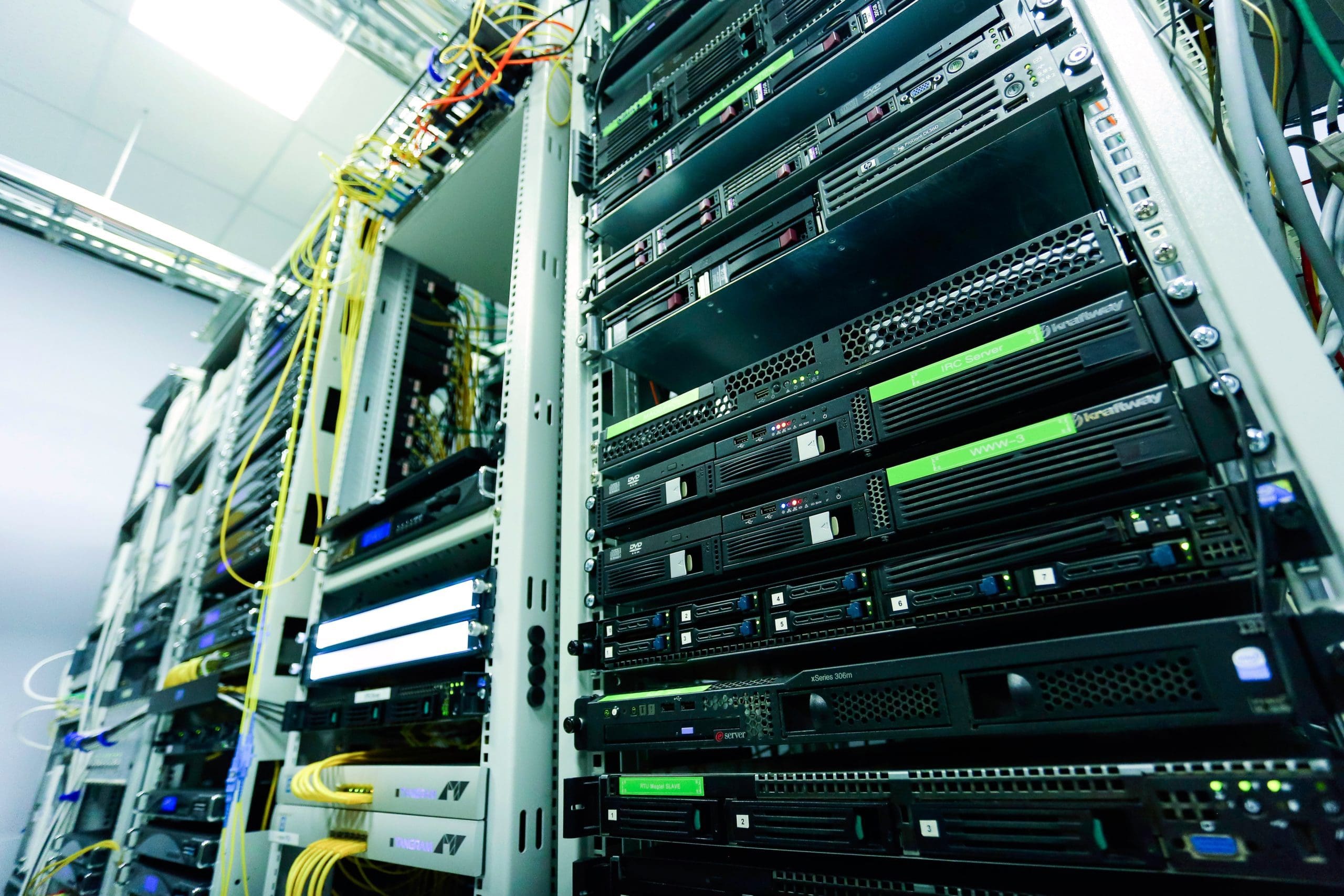
Server racks, serving as the core physical infrastructure carriers in data centers, have seen their standardization process profoundly influence the efficiency of global digital economic development. According to an industry report released by International Data Corporation (IDC) in 2024, the global server rack market is projected to reach $15.6 billion by 2026, with a compound annual growth rate (CAGR) of 8.7% between 2022 and 2026. This growth is primarily driven by accelerated digital transformation in the Asia-Pacific region, where its market share has increased from 28% a decade ago to 43% currently, making it the world's largest server rack consumption market.
Technical standardization organizations play a decisive role in this process. Beyond the internationally adopted 19-inch standard, the Open Rack v3.1 specification released by the Open Compute Project (OCP) in 2023 introduced innovative designs such as 48V DC power supply and centralized thermal management, significantly improving rack-level energy efficiency. The European Commission's parallel advancement of the ecodesign regulation for servers (EU 2019/424) imposes mandatory requirements on rack idle power consumption and material recycling rates. The evolution of these standards has transformed modern server racks from simple equipment containers into integrated infrastructure platforms. According to industry research organization Uptime Institute, deployments of racks compliant with the latest international standards surpassed traditional designs for the first time in 2023, marking the industry's entry into a new development phase.
Convergence of Materials Science and Structural Engineering
The widespread application of high-strength aluminum alloys in server rack manufacturing represents a significant advancement in materials engineering. Compared to traditional cold-rolled steel, 6000-series aluminum alloys can reduce overall rack weight by approximately 35% while maintaining equivalent structural strength, which is crucial for optimizing data center floor loading capacity. A 2024 technical white paper from the Japan Light Metal Association indicates that hybrid structural designs combining aluminum alloy frames with carbon fiber-reinforced composites can improve rack vibration resistance by over 50%, particularly important for facility deployment in seismically active regions.
Innovations in structural design are equally notable. Modular assembly technology enables standard server racks to flexibly adapt to different depth requirements ranging from 600mm to 1200mm without replacing the main frame. A patented connection system developed by a leading German manufacturer allows rack expansion or reconfiguration within approximately 15 minutes using common tools, saving about 70% of deployment time compared to traditional welding processes. These design innovations directly address the special requirements of rapid deployment and flexibility in edge computing scenarios. According to a specialized survey by 451 Research, server racks employing new structural designs can improve space utilization by up to 22% in compact data center projects while reducing total cost of ownership by approximately 18%.
Technological Breakthroughs and Efficiency Evolution in Power Architecture
Power supply systems, serving as the "energy heart" of server racks, are undergoing a technological paradigm shift from alternating current (AC) to direct current (DC). The 48V DC power supply scheme led by the Open Compute Project improves power efficiency from 88-92% in traditional UPS systems to 97-99% by eliminating multiple AC-DC conversion stages. This technological breakthrough means that a medium-sized data center deploying 100 racks could reduce annual power loss by approximately 450 megawatt-hours, equivalent to 300 tons of CO₂ emissions reduction.
The mature application of dynamic power management technology further optimizes energy efficiency. The rack-level power capping technology jointly developed by Intel and several rack manufacturers can intelligently adjust power supply strategies based on actual workloads, achieving 10-25% energy savings while ensuring performance. Actual deployment data shows that server racks equipped with intelligent power management can optimize Power Usage Effectiveness (PUE) to below 1.15 under mixed workload conditions, far surpassing the 1.6-1.8 levels of traditional designs. These technological advances not only reduce operational costs but also remove energy bottlenecks for high-density computing deployments, with single-rack power density currently exceeding 50kW, providing infrastructure support for high-energy-consumption applications like AI training clusters.
Multidimensional Technical Pathways for Intelligent Cooling Systems
With the continuous increase in chip thermal design power (TDP), thermal management systems for server racks face unprecedented challenges. The third-generation Intel Xeon Scalable processors released in 2024 have reached maximum TDPs of 350W, while some accelerator cards exceed 700W per card. In response to this trend, cooling technologies are evolving simultaneously along three paths: air, liquid, and phase-change.
In air cooling, targeted airflow optimization technology has made significant progress. Airflow guide components optimized through computational fluid dynamics (CFD) simulations can improve cold air utilization from the traditional 60% to over 85%. Test data from a hyperscale cloud service provider shows that optimized rack-level cooling solutions can increase server inlet temperatures by 3-5°C, thereby reducing cooling energy consumption by 15-20%. This "higher temperature operation" strategy is rewriting the rules of data center thermal management.
The commercialization process of liquid cooling technology has accelerated noticeably. According to market analysis by global thermal management solutions provider Vertiv, deployments of server racks using direct liquid cooling technology increased by 240% year-over-year in 2024, reaching 35% penetration in high-performance computing. Innovative cold plate designs can remove over 90% of chip heat directly through liquid media, leaving only minimal residual heat for air systems to handle. This hybrid cooling architecture maintains high heat dissipation efficiency while significantly reducing system complexity and maintenance requirements. Test results from a European national laboratory show that liquid-cooled rack clusters can maintain overall PUE values consistently between 1.03-1.05, a performance level unattainable by traditional air-cooled systems.
Intelligent Management Systems and Predictive Maintenance
The proliferation of IoT sensor technology has endowed modern server racks with unprecedented environmental awareness capabilities. Each standard rack unit can now integrate up to 15 different types of sensors, monitoring temperature gradients, airflow velocity, access status, vibration amplitude, and liquid leakage risks in real time. These data undergo preliminary processing by edge computing nodes embedded within the rack before being uploaded to central management systems, forming a complete digital mirror of data center infrastructure.
The application of artificial intelligence algorithms in fault prediction has shown significant effectiveness. Machine learning models trained on historical operational data can predict power module failures 72 hours in advance with 89% accuracy, and fan performance degradation 48 hours in advance with 94% accuracy. Actual operations data indicate that server rack clusters employing predictive maintenance experience 67% less unplanned downtime and 41% lower annual maintenance costs compared to traditional scheduled maintenance models. A large US financial institution's data center reduced mean time to repair from 4.2 hours to 1.1 hours over three years by deploying intelligent rack management systems, improving service availability to 99.999%.
Digital twin technology further extends management boundaries. By creating high-fidelity virtual models of server racks in digital space, operations teams can simulate system behavior under equipment expansion, configuration changes, and failure scenarios, evaluating impacts and optimizing plans before implementation. This "simulate before implement" workflow has reduced configuration change error rates by 78% and improved change execution efficiency by 55%. With the proliferation of 5G private networks in data centers, synchronization latency between digital twin models and physical racks has been reduced to milliseconds, enabling near-real-time virtual-physical interaction.
Sustainable Design and Circular Economy Practices
Environmental sustainability has become a key consideration in server rack design. The European Union's upcoming ecodesign regulation for servers requires that newly deployed racks contain at least 25% recycled materials by 2027, increasing to 35% by 2030. This regulation prompts manufacturers to rethink material selection strategies. Leading companies have already developed rack frames using up to 40% recycled aluminum, reducing carbon footprint by 52% compared to traditional materials.
The commercial application of waste heat recovery technology has opened new pathways for data center energy efficiency. Data center clusters in Stockholm, Sweden, supply heating to 10,000 households annually by feeding waste heat from server racks into district heating networks, while maintaining data center PUE below 1.02. This energy utilization model is being promoted across multiple European countries, with projections indicating that 15% of European data centers will have waste heat recovery capability by 2026, potentially recovering 25 terawatt-hours of heat annually.
Modular design and improved repairability significantly extend product lifecycles. New-generation server racks employ standardized interfaces and tool-less disassembly designs, reducing average component replacement time from 2 hours to 20 minutes. Designs achieving 85% modularity allow rack main structures to undergo five complete reconstructions while maintaining performance stability. Industry lifecycle assessments show that highly modular rack designs have 31% lower 20-year total cost of ownership than traditional designs while reducing electronic waste generation by 45%.
Future Technology Outlook and Development Trends
The maturation of silicon photonics technology may redefine internal interconnection architectures within server racks. Optical interconnect solutions under development by chip manufacturers like Intel could increase data transfer rates between servers within a rack to 1.6 terabits per second while reducing interconnect power consumption by 90%. This breakthrough would decrease intra-rack cabling space requirements by 70%, enabling higher-density computing deployments.
The commercialization of quantum computing devices is beginning to impose special requirements on infrastructure. Superconducting quantum processors require operating environments near absolute zero, presenting unprecedented challenges for server rack thermal insulation, vibration control, and electromagnetic shielding. Some research institutions have developed specialized cryogenic computing racks capable of maintaining 0.1-micron-level vibration stability at 4K (-269°C). Although such specialized racks currently represent only 0.3% of the total market, their technological influence will continue to expand as quantum computing moves from laboratories to practical applications.
The deep development of autonomous operations systems will transform data center operational models. Predictive maintenance systems based on digital twins and artificial intelligence are projected to autonomously handle 85% of common failures by 2028, optimizing the ratio of data center operations personnel to racks from the current 1:150 to 1:400. This increased automation will not only reduce operational costs but also significantly improve infrastructure reliability and response speed.