

Technological Evolution and Global Industry Landscape
Sheet metal laser cutting technology, as a critical component of modern precision manufacturing, is undergoing a profound transformation from traditional processing methods to digitalized, intelligent production. According to the 2024 annual report released by global market research firm MarketsandMarkets, the global market size for sheet metal laser cutting equipment is projected to reach $7.65 billion by 2028, with a compound annual growth rate (CAGR) of approximately 6.8% maintained from 2023 to 2028. This growth is primarily driven by automotive lightweighting, new energy equipment manufacturing, and the rapid development of high-end electronics industries. Particularly in the Asia-Pacific region, the combined market share of China, Japan, and South Korea exceeds 52% of the global total, forming a significant industrial cluster effect.
Technical standardization processes continue to advance in this field. The International Organization for Standardization (ISO) updated the ISO 9013 standard in 2023, introducing more precise quantitative requirements for surface quality, dimensional tolerances, and cut characteristics in sheet metal laser cutting. Simultaneously, the energy efficiency classification system for laser cutting equipment developed by the German Mechanical Engineering Industry Association (VDMA) in collaboration with major European manufacturers divides equipment energy efficiency into five grades, promoting industry transition toward green manufacturing. The implementation of these standards has elevated cutting accuracy in high-end sheet metal laser cutting equipment from ±0.1mm to ±0.05mm, with repeat positioning accuracy reaching ±0.03mm, laying the foundation for micron-level precision machining.
Breakthroughs in Light Source Technology and Application Expansion
Continuous advancements in fiber laser technology are reshaping the capability boundaries of sheet metal laser cutting. In 2024, global laser leader IPG Photonics introduced a new generation of high-brightness fiber lasers with a beam parameter product (BPP) value reduced to 1.2mm·mrad, a 30% improvement over previous generation products. This breakthrough enables sheet metal laser cutting to achieve narrower kerf widths (as low as 0.08mm for carbon steel) while maintaining high power, significantly reducing material waste. Industry data shows that laser cutting systems employing the latest light source technology achieve 40-60% higher cutting speeds for stainless steel compared to traditional CO2 lasers, while reducing cutting cost per meter by 25-35%.
The industrial application of ultrafast laser technology has opened new frontiers for sheet metal laser cutting. The extremely short pulse width and high peak power characteristics of picosecond and femtosecond lasers result in almost no heat-affected zone during material removal, making them particularly suitable for precision thin sheet processing below 1mm thickness. In medical device manufacturing, this "cold processing" method can complete cutting of complex microstructures without altering the material's microstructure, achieving cut quality below Ra 0.8μm. According to laser industry development reports, ultrafast lasers accounted for 8.7% of sheet metal laser cutting applications in 2024, with projections indicating an annual growth rate of 22% over the next five years.
Multi-wavelength composite laser technology has emerged as another important development direction. By coaxially combining laser beams of different wavelengths, systems can automatically select the optimal wavelength for processing based on material characteristics. For example, when processing materials with significant absorption differences at specific wavelengths such as aluminum and copper alloys, composite laser systems can improve processing efficiency by over 50%. After adopting this technology, a U.S. aerospace manufacturer increased cutting efficiency for aviation aluminum structural components by 65% while reducing subsequent processing steps by 30%.
Integrated Innovation in Intelligent Production Systems
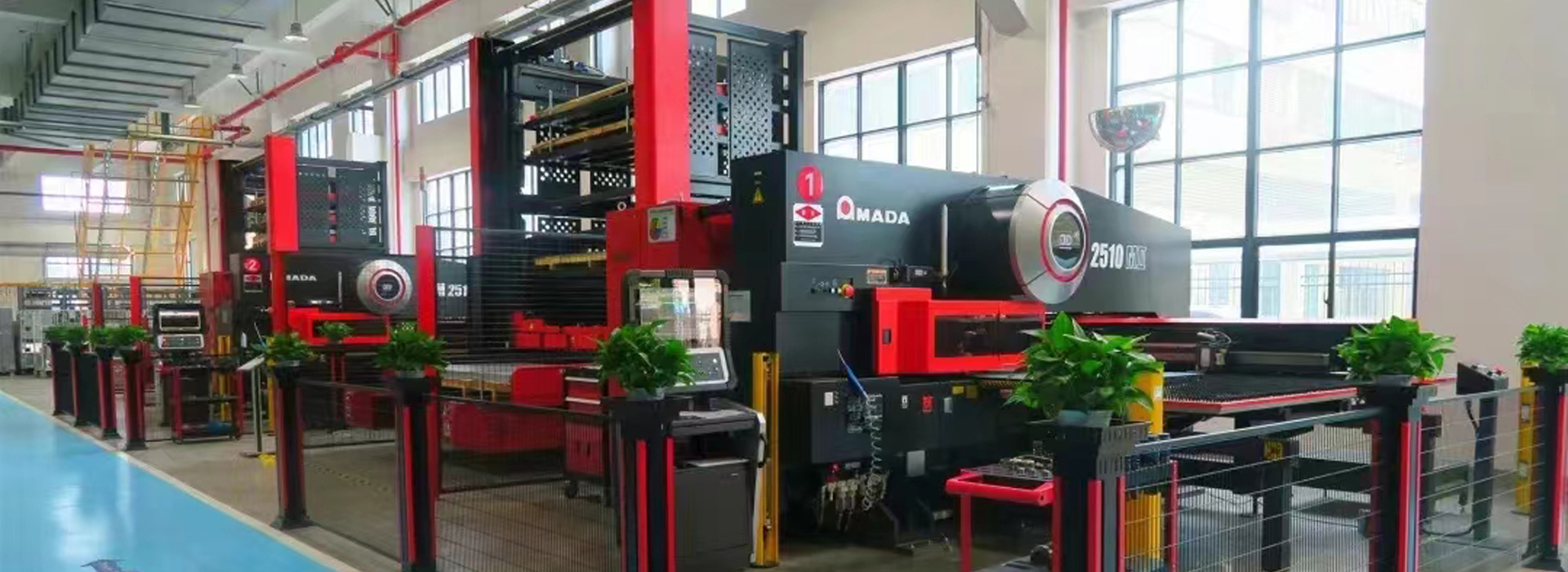
Deep integration of automation and intelligence is transforming production models in sheet metal laser cutting. Modern laser cutting cells have evolved into complete systems integrating automatic loading, real-time monitoring, adaptive processing, and intelligent sorting. TRUMPF Group's latest TruLaser Cell 3000 series features a machine vision-based sheet recognition system capable of automatically detecting material type, thickness, and surface condition, adjusting cutting parameters accordingly to achieve true "perception-decision-execution" closed-loop control. Actual production data shows that such intelligent systems can improve material utilization from the traditional 75-82% to 88-92%, while reducing setup time by 40%.
Digital twin technology applications in sheet metal laser cutting are maturing. By establishing precise digital models of laser cutting equipment in virtual environments, engineers can simulate cutting processes under different parameters, predict cut quality, thermal deformation, and processing time, optimizing process solutions before actual production. Solutions provided by Siemens Industrial Software demonstrate that digital twin technology can shorten new part process development cycles by 60% and reduce material trial waste by 85%. An automotive component manufacturer applying this technology successfully compressed mold development time from 28 days to 11 days while improving first-trial qualification rates from 68% to 94%.
Integration of IoT platforms enables sheet metal laser cutting equipment to become key nodes in the industrial internet. Through OPC UA protocols and 5G communication technology, cutting equipment can upload operational status, processing data, and energy consumption information to cloud platforms in real time. Big data analytics algorithms optimize cutting paths, predict maintenance needs, and monitor energy efficiency based on this data. Industry case statistics show that IoT-based intelligent monitoring systems can improve overall equipment effectiveness (OEE) by 15-22%, reduce unplanned downtime by 60-75%, and lower unit energy consumption by 8-12%.
Material Processing Range Expansion and Process Innovation
Breakthroughs in high-reflection material processing technology have significantly expanded sheet metal laser cutting applications. Traditional laser processing of high-reflectivity metals like copper, gold, and aluminum has long faced challenges of low energy absorption and unstable processes. By employing short-wavelength light sources such as blue lasers (450nm wavelength) and green lasers (515nm wavelength), system absorption rates for high-reflection materials can increase from less than 30% to over 60%. Laser manufacturer NLight developed a 450nm blue laser specifically optimized for copper cutting, achieving cutting speeds of 4.5m/min for 3mm thick red copper plates with cut quality meeting direct usage requirements for electrical connectors.
Important progress has also been made in composite and laminated material cutting technology. Carbon fiber reinforced polymer (CFRP) and titanium-aluminum laminated structures widely used in aerospace traditionally suffer from delamination, burrs, and thermal damage during mechanical processing. Through precise control of laser parameters and assist gases, modern sheet metal laser cutting systems achieve clean cuts with heat-affected zones controlled within 0.1mm. Data from a European aircraft manufacturer indicates that replacing traditional waterjet cutting with laser cutting improved CFRP component processing efficiency threefold, reduced tooling costs by 70%, and completely eliminated water pollution issues.
Continuous improvement in thick plate cutting capability marks the deepening penetration of sheet metal laser cutting into heavy manufacturing. Commercialization of ultra-high-power fiber lasers above 30kW has pushed cutting thickness limits beyond 100mm for carbon steel and 80mm for stainless steel. Combined with innovative nozzle design and gas control technology, thick plate cutting achieves perpendicularity within 0.5° and surface roughness Ra≤12.5μm, meeting direct welding requirements for heavy machinery and marine engineering structures. Actual engineering applications show that compared to traditional plasma cutting, laser thick plate cutting improves dimensional accuracy by over 50% while reducing subsequent processing by 60%.
Precision Control and Quality Assurance Technology
Development of online monitoring and real-time adjustment systems has ushered sheet metal laser cutting into a new stage of active quality control. Integrated applications of coherent imaging and spectral analysis technologies enable real-time monitoring of plasma morphology, melt pool behavior, and cut quality during cutting processes, dynamically adjusting laser power, focus position, and cutting speed through closed-loop control systems. The intelligent monitoring system developed by Germany's Fraunhofer Institute for Laser Technology can detect kerf width changes as small as 0.05mm and perpendicularity deviations of 0.1°, making compensation adjustments within one millisecond.
Focus control precision is crucial for ensuring cutting quality. New-generation adaptive optical systems employing high-speed piezoelectric ceramic drives can adjust focus position at 10kHz frequencies, accommodating surface fluctuations of uneven sheets. Combined with temperature compensation algorithms, systems can control focus drift within ±0.02mm across the entire operating temperature range. Actual production data shows that precise focus control improves cutting accuracy for thin sheets (thickness <1mm) by 40% while reducing cutting taper by 60%.
Advancements in residual stress control technology reduce processing deformation. By optimizing cutting paths and introducing preheating and slow cooling processes, modern sheet metal laser cutting systems can reduce processing-induced residual stress by over 70%. Particularly in thin-walled and precision structural component processing, stress control technology reduces flatness errors from the traditional 0.5-1mm/m to 0.1-0.2mm/m. After applying this technology, a precision instrument manufacturer improved flatness qualification rates for sensor component brackets from 82% to 99.5% while reducing assembly adjustment time by 75%.
Environmental Protection and Sustainable Development Practices
Energy-saving technology has become a core competitive advantage for sheet metal laser cutting equipment. New-generation equipment universally adopts multiple energy-saving designs: intelligent standby functions automatically reduce auxiliary system power consumption during idle periods; efficient frequency conversion technology achieves electro-optical conversion efficiency exceeding 45% for lasers; waste heat recovery systems utilize heat generated by cooling systems for workshop heating. European energy efficiency evaluations show that laser cutting systems employing comprehensive energy-saving technologies can reduce annual energy consumption by 30-40% compared to traditional equipment, shortening payback periods to 18-24 months.
Development and application of environmentally friendly assist gases reduce environmental impacts during processing. Traditional oxygen-assisted cutting generates substantial oxide dust and nitrogen oxides, while maturation of new synthetic gases and air cutting technologies significantly reduces pollutant emissions while maintaining cut quality. Particularly nitrogen recovery and circulation systems for stainless steel cutting can reduce gas consumption by 70% and operating costs by 40%. An environmental assessment report from a Japanese manufacturer shows that adopting environmentally friendly cutting processes reduced particulate matter concentration in workshops by 65% and nitrogen oxide emissions by 80%.
Material utilization optimization reduces resource consumption at the source. Intelligent nesting software using genetic algorithms and artificial intelligence improves nesting efficiency for irregular parts to 92-95%, representing a 15-20 percentage point improvement over traditional manual nesting. Simultaneously, efficient reuse technology for scrap materials can improve comprehensive material utilization to over 98%. Practices from a global large-scale sheet metal processing enterprise demonstrate that through optimized nesting and remnant material management, annual steel procurement volume decreased by 12%, equivalent to reducing CO₂ emissions by approximately 8,500 tons.
Industry Applications and Future Outlook
The new energy vehicle industry demonstrates explosive growth in demand for sheet metal laser cutting. Mass production of battery pack structural components, motor housings, and body lightweighting parts requires laser cutting systems with high speed, precision, and flexibility. Large body structural components after integrated die casting require laser precision trimming and connection hole processing with tolerance requirements reaching ±0.1mm. Industry projections indicate that by 2028, new energy vehicle manufacturing will account for 35% of total sheet metal laser cutting demand, becoming the largest single application market.
Miniaturized electronic device manufacturing drives development of ultra-precision cutting technology. Smartphone mid-frames, wearable device housings, and micro-sensor components impose near-critical requirements on cut quality: burr-free, heat-affected zone-free cuts with surface roughness Ra<0.4μm. Applications of UV and ultrafast lasers in these fields are increasingly widespread, achieving cutting precision below 5μm with precision motion platforms. Upgrade demands from the consumer electronics industry are expected to maintain annual growth rates above 25% for the precision micro-cutting market over the next five years.
Personalized customization production models promote innovation in flexible manufacturing systems. Flexible production lines based on sheet metal laser cutting can rapidly switch product models without mold changes, with minimum batch sizes reducible to single pieces. Combined with online inspection and automatic sorting, this model is particularly suitable for medical devices, scientific instruments, and small-batch industrial spare parts production. Market analysis indicates that deployments of flexible laser processing systems are growing at 18% annually, projected to constitute 45% of the entire laser cutting equipment market by 2027.
Future technological development will focus on multi-process integration and full-process digitalization. Composite equipment combining laser cutting with welding, additive manufacturing, and surface treatment processes is under development, promising seamless workflow between multiple processes for single workpieces. Deep integration of artificial intelligence and machine learning algorithms will enable systems with autonomous process optimization and fault prediction capabilities. According to technology roadmap projections, by 2030 fully autonomous intelligent laser cutting cells will become industry standards, reducing human intervention by 90% and improving overall production efficiency by over 200%.